
Learn 5 rapid ways to verify a real titanium factory and authenticate suppliers in under 15 minutes. Protect your projects by spotting fake titanium factories, ensuring quality, safety, and confident procurement with these essential checks.
By Max Jiang | November 16, 2025
Índice
This guide outlines five rapid methods to verify the legitimacy of a titanium factory within 15 minutes, addressing the risks of fraudulent or substandard suppliers in a market with surging demand. These methods are designed for procurement managers, engineers, business owners, and hobbyists to quickly assess supplier credibility and material authenticity.
1. Certification & Quality Management System (QMS) Scan (3 Minutes)
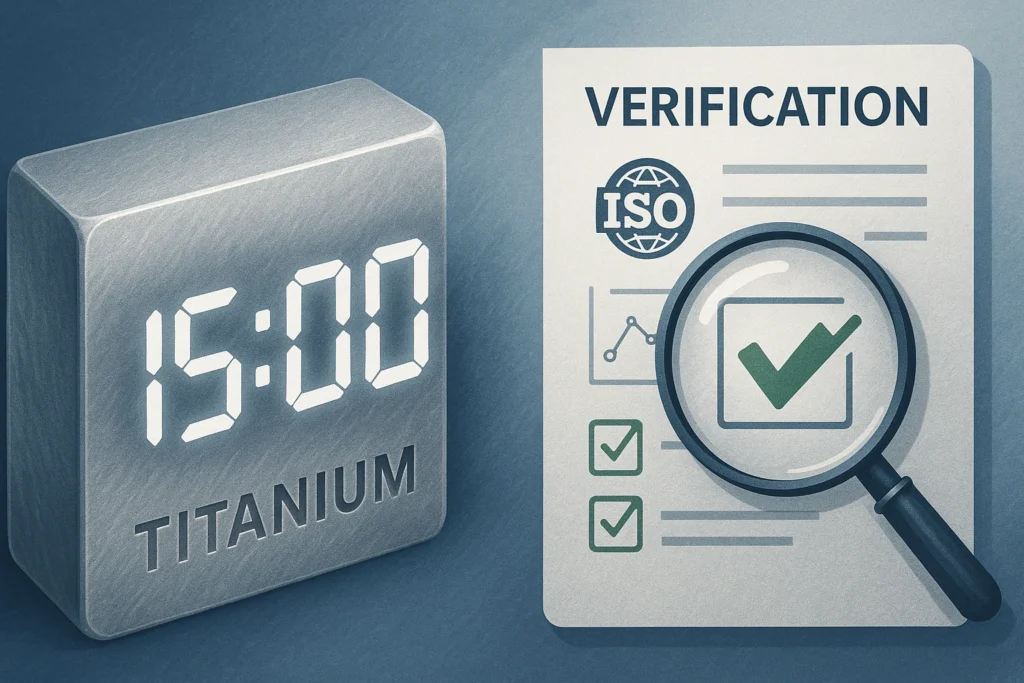
Purpose:To quickly assess a factory’s commitment to internationally recognized quality standards.
Key Certifications to Request and Verify:
- ISO 9001:The global benchmark for Quality Management Systems.
- AS9100 (Manufacturers) / AS9120 (Distributors):Essential for aerospace and defense applications, building upon ISO 9001 with industry-specific requirements.
- ISO 13485:Crucial for medical device components.
- Material Standards:Adherence toASTM(American Society for Testing and Materials) orASME(American Society of Mechanical Engineers) for specific titanium grades and product forms (e.g., ASTM B348 for bars/billets, ASTM B265 for sheet/plate/strip).
Verification Steps:
- Cross-reference the issuing body (e.g., TUV Rheinland, SGS, BSI) against reputable registrar databases.
- Verify validity dates to ensure the certification is current.
- Check the scope of certification to ensure it covers the intended products or processes.
- Utilize online portals of certification bodies to verify certificate numbers.
Why it Works:Absence of key certifications, outdated documents, or untraceable issuing bodies are immediate red flags. A serious factory will readily provide valid certifications. This confirms a foundational commitment to a robust QMS.
2. Material Test Reports (MTRs) Review (5 Minutes)
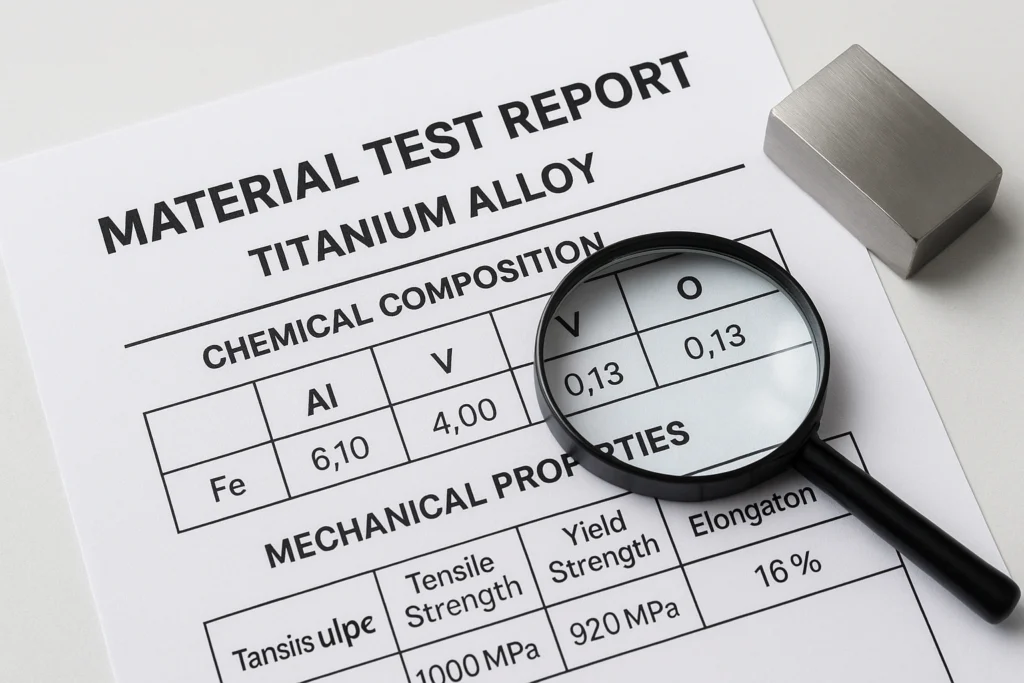
Purpose:To obtain direct evidence of material authenticity and compliance with specified standards.
Essential MTR Verification Steps:
- Insist on Current MTRs:Request reports for thespecifictitanium batch or grade being purchased, not generic data sheets.
- Chemical Composition:Verify percentages of alloying elements and impurities against relevant ASTM/ASME specifications for the grade. Significant deviations are red flags. (Reference: ASTM B348 for Titanium and Titanium Alloy Bars and Billets specifications).
- Mechanical Properties:Confirm tensile strength, yield strength, elongation, and reduction of area fall within specified ranges.
- Traceability:Look for detailed information including ingot source, specific melt number, and processing history. Absence of clear traceability is a serious concern.
- Professional Presentation:Ensure the report is professionally formatted, detailed, and includes appropriate company letterhead and signatures. Hasty or generic reports are suspect.
Why it Works:A complete, professional MTR provides scientific evidence of material properties and adherence to standards. Incomplete or vague reports suggest potential misrepresentation.
3. Quick Physical & Basic Authenticity Checks (If Samples Available) (3 Minutes)
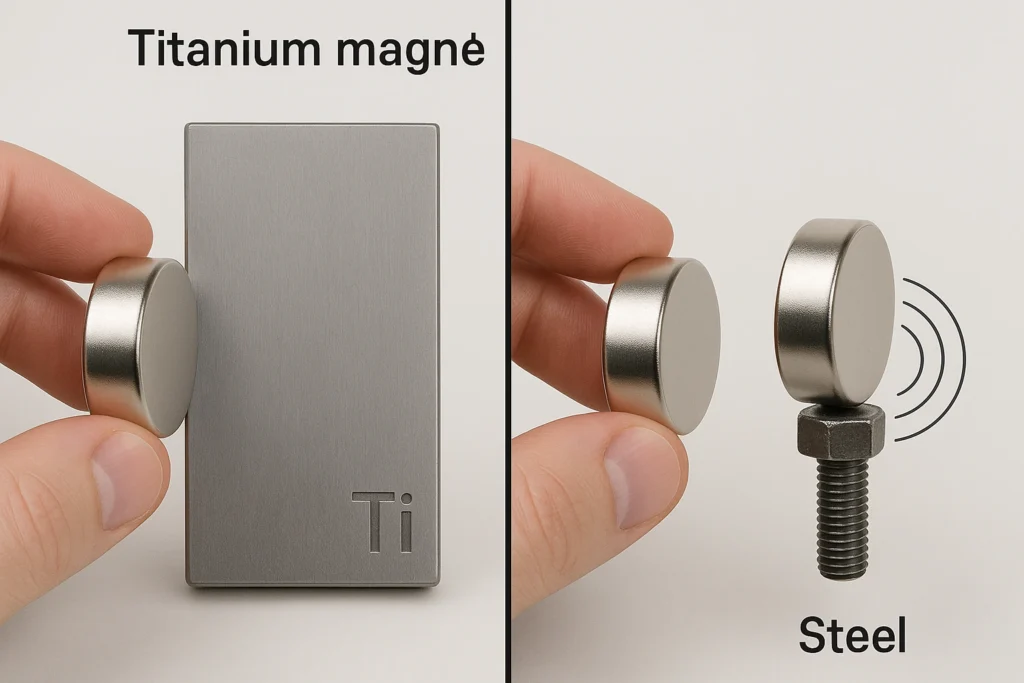
Purpose:To perform immediate, preliminary checks on a physical sample to identify obvious discrepancies.
Rapid Sample Assessment:
- Titanium Magnet Test:Pure titanium and common alloys are non-magnetic or weakly paramagnetic. Strong attraction to a magnet suggests steel or ferrous alloys.
- Weight & Density Check:Titanium’s density is approximately 4.5 g/cm³. A sample that feels as heavy as steel of the same size is likely not titanium.
- Surface Finish & Hallmarks:Inspect for a consistent, grayish-silver metallic luster. Look for clear markings like “Ti” or grade designations (e.g., “Ti-6Al-4V,” “Grade 2”). Absence of markings or signs of rust are suspicious.
Why it Works:These simple tests effectively identify obvious fakes or mislabeled materials without specialized equipment, providing a quick “DIY” authenticity check.
4. Targeted Questions on Manufacturing Controls (3 Minutes)
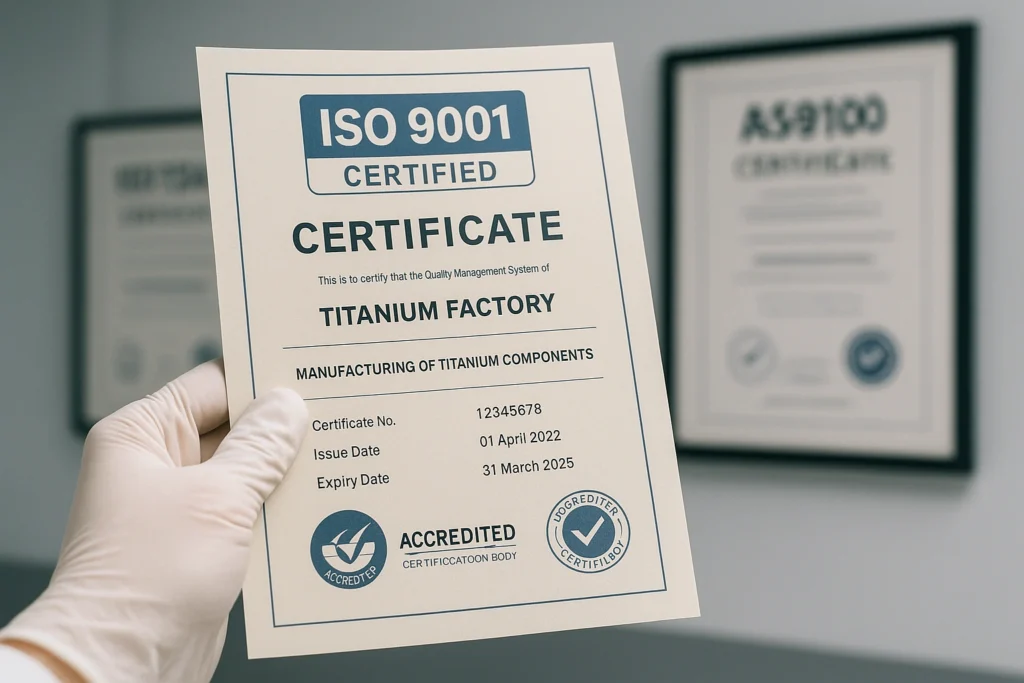
Purpose:To gauge a factory’s expertise, transparency, and adherence to quality control during the manufacturing process.
Key Questions for Process Assurance:
- Contamination Prevention:Inquire about specific protocols to prevent contamination (especially from iron) during processing, melting, and forming. Legitimate factories will have stringent measures like dedicated lines and material segregation.
- Heat Treatment Protocols:Ask about specific procedures for heat treatment and stress relieving, and how their effectiveness is verified. They should mention adherence to standards like AMS 2770 and methods like hardness testing or microstructural analysis.
- Equipment Maintenance & Calibration:Inquire about calibration schedules, standards used (e.g., NIST traceable), and maintenance practices for critical machinery. A robusttitanium quality control checklistshould be evident.
- Waste and Scrap Management:Ask about procedures for managing titanium scrap to prevent re-entry into the prime material stream or how it’s segregated and certified if re-melted.
Why it Works:Direct, detailed answers reveal a factory’s expertise and commitment to quality. Hesitation or vague responses indicate a lack of robust processes.
5. Assess Digital Presence & Transparency (1 Minute)
Purpose:To gain a rapid snapshot of a company’s professionalism, reputation, and transparency.
Rapid Online Footprint Review:
- Website:Look for a professional, well-maintained site with clear contact information, specific service offerings, and credible client testimonials.
- Contact Information:Verify physical address, phone number, and professional email domain (@companyname.com).
- Service Offerings:Ensure they clearly define products and services that match their offerings.
- Testimonials & Case Studies:Seek specific examples of real-world experience.
- Responsiveness & Clarity:Assess promptness and clarity in initial communications.
- Independent Reviews:Search for independent reviews, industry forum discussions, or news articles mentioning the company. Be wary of companies with no online presence or suspiciously perfect reviews.
- Ethical Sourcing:Look for mentions of supply chain transparency or commitment to responsible practices.
Why it Works:A strong, transparent digital footprint and clear communication often correlate with legitimate businesses. Poor websites, evasive responses, or a lack of verifiable online presence are red flags.
Conclusão
These five rapid verification methods provide a powerful initial screening tool for assessing titanium supplier legitimacy, material integrity, and operational transparency. By implementing these quick checks, businesses can mitigate risks, avoid costly mistakes, and ensure partnerships with reliable and authentic titanium suppliers, enabling confident and informed sourcing decisions in a time-sensitive environment.
Principais conclusões
- Certifications are Foundational:Verify ISO 9001 and industry-specific certifications (e.g., AS9100, ISO 13485), checking validity, issuing body, and scope.
- MTRs are Material DNA:Insist on current MTRs for specific batches, verifying chemical composition, mechanical properties, and traceability against standards like ASTM.
- Quick Physical Checks Reveal Obvious Fakes:Use a magnet test, weight/density comparison, and inspect for hallmarks or consistent surface finishes on samples.
- Targeted Questions Uncover Process Gaps:Ask specific questions about contamination prevention, heat treatment, and equipment calibration; vague answers signal potential issues.
- Digital Footprint Reflects Trust:A professional website, clear contact info, credible testimonials, and positive online reputation often correlate with legitimate suppliers.
- Rapid Checks Mitigate Risk:These steps offer fast, effective initial screening to protect against fraud and ensure quality for confident sourcing.
Verify a Real Titanium Factory: Frequently Asked Questions
Below are practical, fast checks you can use to verify a titanium factory’s legitimacy, material quality, and process control before you commit to long-term cooperation.
-
1º trimestre What are the most important certifications for a titanium supplier?
The most critical baseline is a valid ISO 9001 quality management certification covering their titanium manufacturing. For high-risk applications:- AS9100 / AS9120 – essential for aerospace projects
- ISO 13485 – required for medical devices
- Check that they supply material according to ASTM / ASME standards
-
2º trimestre What is a Material Test Report (MTR) for titanium and why is it important?
A Material Test Report (MTR) is a document that provides the chemical composition and mechanical properties of a specific titanium heat or batch. It is the material’s “fingerprint” and proves:- Compliance with the required grade and standard
- Traceability back to the mill or melt
- That tests such as tensile strength and yield were actually performed
-
3º trimestre Can I test titanium authenticity myself at home?
You can do a few quick checks:- Magnet test: pure titanium is essentially non-magnetic.
- Weight check: titanium is noticeably lighter than steel for the same size.
- Markings: genuine products often carry “Ti”, “GR2”, “GR5” or similar grade marks.
-
4º trimestre How can I quickly identify red flags for a fake titanium supplier?
Watch for:- No clear ISO certificates or only expired ones
- Outdated or missing MTRs for supplied material
- Samples that are magnetic or feel like ordinary stainless steel
- Vague answers when you ask about grades, standards, or processes
- A weak online presence: generic website, no physical address, no real company info
-
Q5 What manufacturing controls should a legitimate titanium factory have?
A serious titanium factory will have:- Dedicated or well-controlled lines to prevent contamination with other metals
- Documented heat treatment and machining procedures
- Regular calibration records for key equipment
- Clear scrap and rework management to avoid mixing off-grade material
-
Q6 Why is a titanium supplier’s digital presence important?
A professional digital footprint is often a quick sanity check of credibility. Look for:- A maintained website with clear product and factory information
- Real contact details (phone, email, physical address)
- Consistent branding and documentation
- Independent reviews, testimonials, or case studies