
Introduction: A New Era of High-Performance Drinkware
Across outdoor retail, sporting goods, specialty coffee, corporate gifting, and lifestyle brands, one trend is quietly reshaping the premium drinkware market: titânio.
No longer limited to aerospace or medical applications, titanium has moved into mainstream consumer goods — and procurement managers are taking notice.
For brands looking to differentiate, reduce return rates, increase perceived value, and expand into higher-margin product lines, titanium drinkware offers a unique strategic advantage. With demand rising across North America, Europe, and Japan, titanium products are quickly becoming a core opportunity for distributors, wholesalers, and OEM/ODM brand builders.
This article breaks down why titanium drinkware is winning, and more importantly, why smart procurement teams are adding titanium mugs and vacuum bottles to their portfolios in 2025 and beyond.
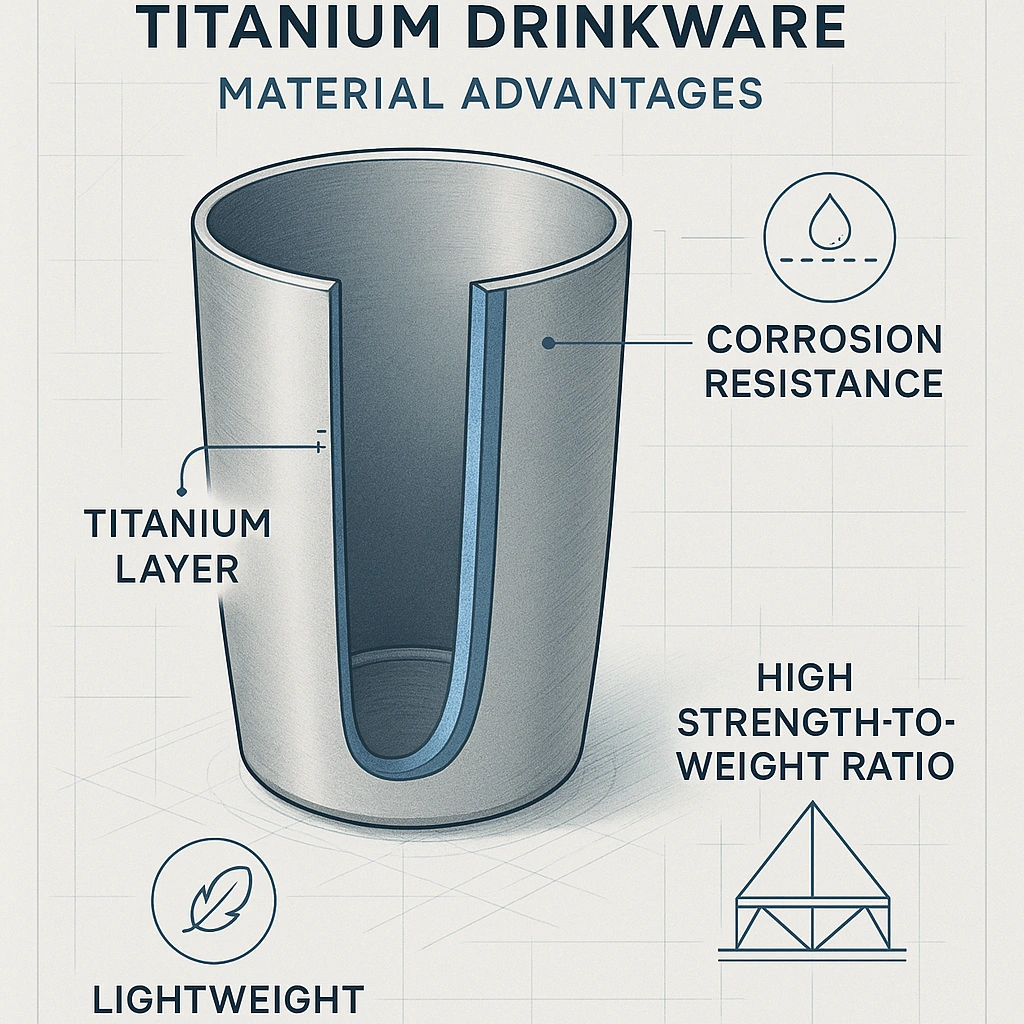
1. Titanium Drinkware: The Ultimate Material Advantage
Titanium is not just a premium metal — it is a category-defining upgrade from stainless steel, aluminum, and glass. For procurement managers, the material itself answers three critical questions:
1.1 Exceptional Strength-to-Weight Ratio
Titanium is 45% lighter than steel yet significantly stronger.
This results in:
- ultralight mugs and bottles ideal for outdoor, hiking, tactical, or travel markets
- lower shipping weights and reduced logistics cost
- products that feel premium without being bulky
For brands positioning toward high-end or adventure audiences, this weight advantage is a major selling point.
1.2 Corrosion-Proof and Rust-Free
Unlike stainless steel, titanium never rusts, even under prolonged exposure to:
- humidity
- salt environments
- acidic beverages
- heat or cold cycles
This dramatically reduces warranty claims — a major concern for procurement teams managing high-volume drinkware programs.
1.3 100% Biocompatible and Safe for Food Contact
Titanium is non-toxic, non-reactive, and FDA/LFGB safe, ensuring:
- zero metallic taste
- zero chemical leaching
- zero odor retention
- complete safety for hot coffee, acidic juices, or alcohol
For health-conscious consumers and brands with safety compliance requirements, titanium is the gold standard.
1.4 Lifetime Durability and Premium Longevity
Titanium drinkware lasts decades, not years.
Compared with aluminum (soft), glass (fragile), or plastic (short-life), titanium creates a premium positioning that brands can confidently market.
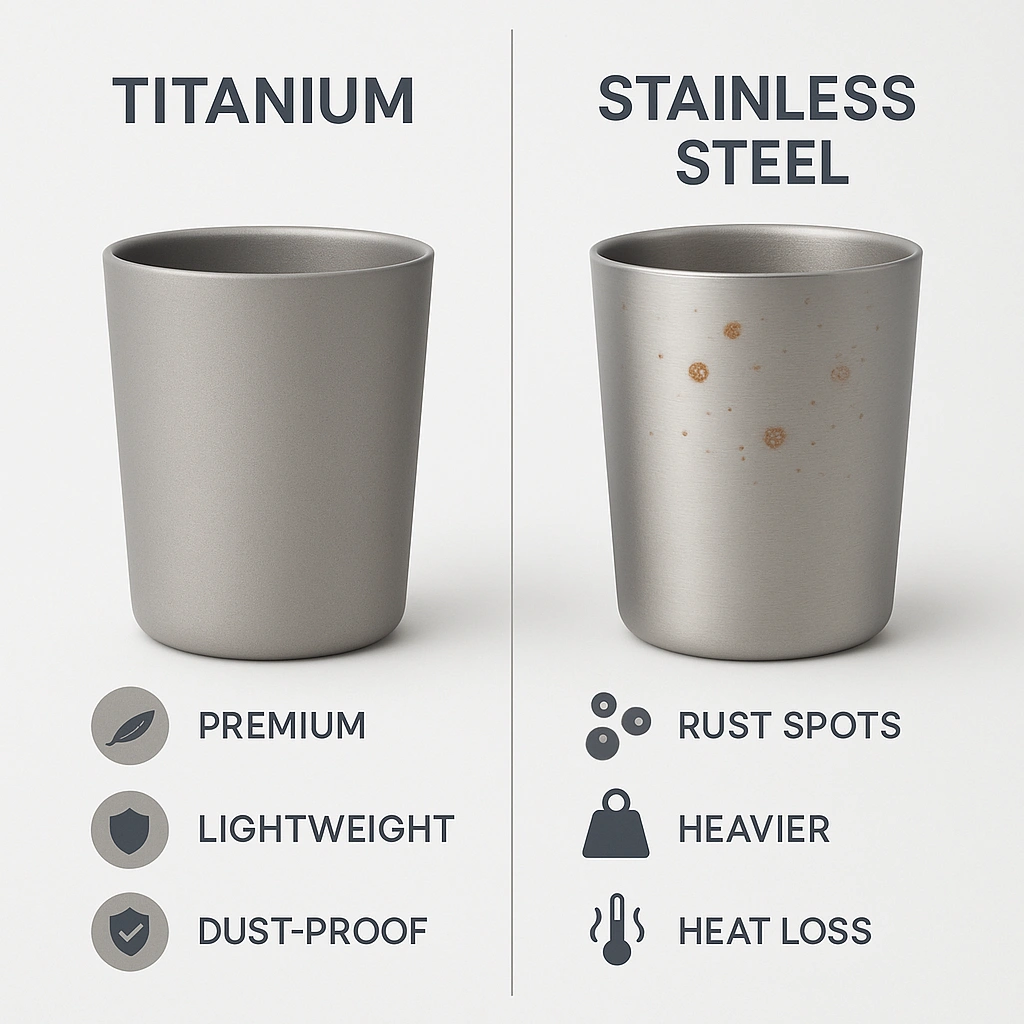
2. How Titanium Enhances Brand Value and Competitive Positioning
Procurement managers and brand directors are increasingly turning to titanium because it generates value far beyond the physical product.
2.1 Higher Retail Pricing and Better Margins
Titanium drinkware sits naturally in a premium price tier, often achieving:
- 2×–4× higher retail price than stainless steel
- broader margin flexibility
- greater perceived value, supporting premium brand positioning
For brands seeking to elevate their SKU mix, titanium provides an immediate upscale signal.
2.2 Lower Return Rates = Higher Net Profit
Return rates on drinkware are typically driven by:
- rust issues
- coating peeling
- dents and deformation
- odor retention
Titanium eliminates all four.
This results in measurable financial impact:
- fewer customer complaints
- fewer replacement shipments
- more repeat purchases
- stronger long-term loyalty
For procurement managers, titanium is not just a cost — it’s a margin-protecting product line.
2.3 Brand Differentiation in an Overcrowded Market
Stainless-steel drinkware has entered a “red ocean” — too many similar products with little differentiation.
Titanium, by contrast:
- has a high perceived value
- is technologically impressive
- aligns with premium lifestyle and outdoor identity
- commands attention in shelf displays and online catalogs
As marcas que introduzem SKUs de titânio antecipadamente geralmente desfrutam de 12 a 24 meses completos de vantagem competitiva.
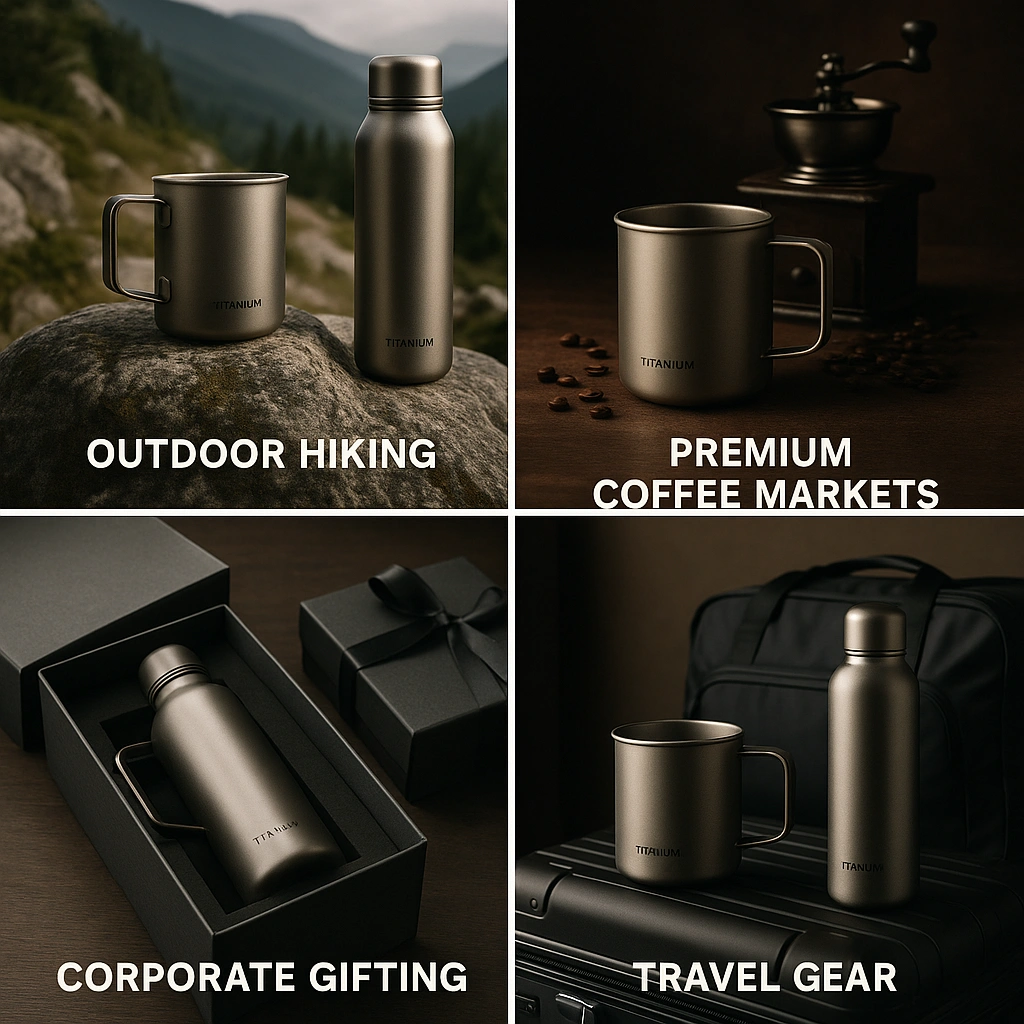
3. Tendências de demanda: por que o titânio está crescendo nos segmentos B2B
As equipes de compras não estão apenas reagindo ao hype – o titânio está experimentando uma verdadeira atração no mercado.
3.1 O varejo de atividades ao ar livre e de aventura está impulsionando a mudança
O titânio já é o material preferido em equipamentos ultraleves.
Drinkware foi a próxima categoria lógica.
Caminhantes, escaladores, entusiastas de bushcraft e campistas valorizam o titânio para:
- baixo peso
- durabilidade extrema
- construção à prova de fogo (as canecas podem ser aquecidas diretamente sobre a chama)
- sabor limpo
Para compradores B2B que atendem varejistas do tipo REI ou marcas de outdoor, os utensílios para bebidas de titânio estão se tornando uma categoria obrigatória.
3.2 Brindes Corporativos e Mercadorias Premium
Corporate clients increasingly want:
- sustainable
- premium
- long-lasting
- elegant
gifts.
Titanium mugs and bottles check all four boxes.
3.3 Specialty Coffee and Tea Markets
The specialty coffee sector wants:
- no flavor contamination
- precise heat retention
- professional aesthetic
Titanium fits perfectly, and procurement managers in this sector are adopting it for barista tools, mugs, and thermos solutions.
4. Titanium for Procurement Managers: Practical Supply Chain Advantages
Beyond product performance, titanium delivers operational benefits that matter deeply to B2B buyers.
4.1 Lower Damage Rate in Warehousing and Shipping
Titanium does not dent easily, crack, or deform.
This reduces:
- QC failure
- warehouse waste
- customer return ratio
- logistics damages
You receive more sellable units per shipment — improving overall efficiency.
4.2 White-Label and OEM Flexibility
Titanium drinkware is highly suitable for:
- gravação a laser
- CNC engraving
- color anodizing
- branding customization
- packaging customization
This makes it ideal for private-label brands that want to create premium, signature product lines.
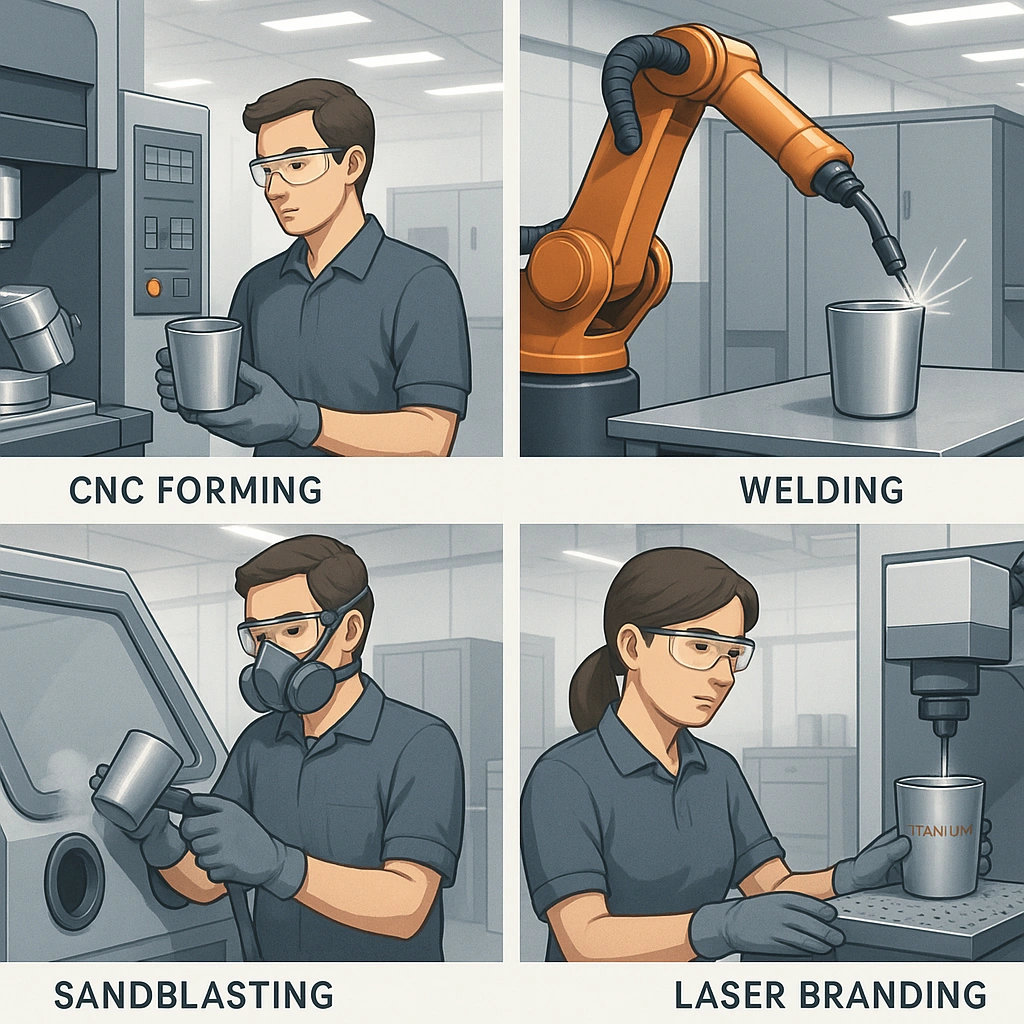
5. What Procurement Managers Should Look for When Sourcing Titanium Drinkware
Before selecting suppliers, procurement teams should evaluate the following:
5.1 Grade of Titanium
Commercially pure Grade 1 and Grade 2 are best for drinkware.
Avoid suppliers that cannot specify grade or provide certifications.
5.2 Welding and Forming Quality
Titanium requires precision manufacturing.
Look for:
- uniform welds
- no internal oxidation
- smooth inner surface
- consistent thickness
5.3 Surface Treatment Options
Premium brands often require:
- sandblasted matte finish
- brushed finish
- polished finish
- color anodizing
A capable supplier should offer multiple options.
5.4 Vacuum Technology for Titanium Bottles
Titanium vacuum bottles require:
- double-wall forming
- vacuum pumping
- long-term insulation testing
For procurement managers sourcing titanium vacuum flasks, supplier technical capabilities are crucial.
(Internal link: https://7titanium.com/products/titanium-drinkware/vacuum-bottles/ )
6. Why Now Is the Time for Brands to Adopt Titanium Drinkware
Titanium drinkware sits at the intersection of four major global trends:
- premiumization of outdoor equipment
- growth in sustainable, long-life products
- shift toward health-safe, food-grade materials
- demand for lightweight, durable travel gear
Brands that adopt titanium early gain a strong positioning advantage and can lead the next product wave.
Conclusion: Titanium Drinkware Is a Strategic Investment — Not Just a Product Choice
For procurement managers and brand owners, the transition to titanium drinkware is not about following a trend — it’s about aligning your product line with long-term market demand and premium consumer expectations.
Titanium delivers:
- higher margins
- lower return rates
- stronger branding impact
- long-term customer loyalty
- product durability that outcompetes all alternatives
If your brand aims to move upward into premium outdoor, travel, lifestyle, specialty coffee, or corporate gifting markets, titanium drinkware is not optional — it is a strategic advantage.