
Kits d'échantillons de titane pour les marques d'extérieur : prévenir les pannes tardives
Pourquoi les échantillons de titane pratiques sont la police d'assurance la moins chère que vos piquets de tente et vos programmes d'équipement d'extérieur puissent acheter.
Votre équipe produit vient de passer huit semaines à finaliser la conception des piquets de tente. L'ingénierie a signé la CAO. Le sourcing a trouvé un fournisseur proposant du titane grade 5 à un prix compétitif. Tout le monde est prêt à commander le premier lot de production.
Puis les échantillons arrivent. Le matériau se forme différemment de l’acier inoxydable que vous utilisez. Le retour élastique est pire que prévu. La finition de surface indiquée ne correspond pas aux images de référence approuvées par votre concepteur. Les essais d'usinage révèlent des problèmes d'usure des outils auxquels votre fabricant sous contrat n'était pas préparé. Vous avez désormais trois mois de retard sur le calendrier, négociant des coûts d'outillage révisés et expliquant à la direction pourquoi le lancement du produit est reporté à la saison prochaine.
J’ai observé ce scénario se dérouler avec plus d’une douzaine de marques outdoor au cours des cinq dernières années. Le fil conducteur ? Les équipes ont pris des engagements d'approvisionnement irréversibles sur la base de fiches techniques et de devis sans tester physiquement le matériau au préalable. Ils ont traité le titane comme une version légèrement meilleure des métaux qu’ils connaissaient déjà, plutôt que comme un matériau au comportement fondamentalement différent.
Un kit complet d’échantillons de titane coûte quelques centaines de dollars et est expédié en quelques jours. Il permet à vos équipes de produits, de conception et d'ingénierie de gérer le matériau, d'effectuer des essais de formage, de tester les finitions et de comparer les fournisseurs avant que quiconque ne signe un bon de commande. Pour les marques qui se lancent dans le titane ou évaluent de nouveaux fournisseurs, c’est la police d’assurance la plus efficace que vous puissiez souscrire.
La courbe d'apprentissage du titane
Si l’expérience de votre équipe concerne l’aluminium ou l’acier inoxydable, le titane vous surprendra d’une manière que les fiches techniques ne reflètent pas. Les différences ne sont pas mineures : elles affectent le formage, l’usinage, la finition et même la façon dont vous concevez les outils.
Titanium’s thermal conductivity is roughly a tenth of aluminum’s. Heat doesn’t dissipate away from the cutting zone during machining; instead, it concentrates at the tool-work interface. That behavior demands slower cutting speeds, aggressive coolant application, and carbide tooling that can handle sustained heat. Teams used to running aluminum on their CNC mills discover quickly that the same feeds and speeds will destroy tooling or produce chatter on titanium.
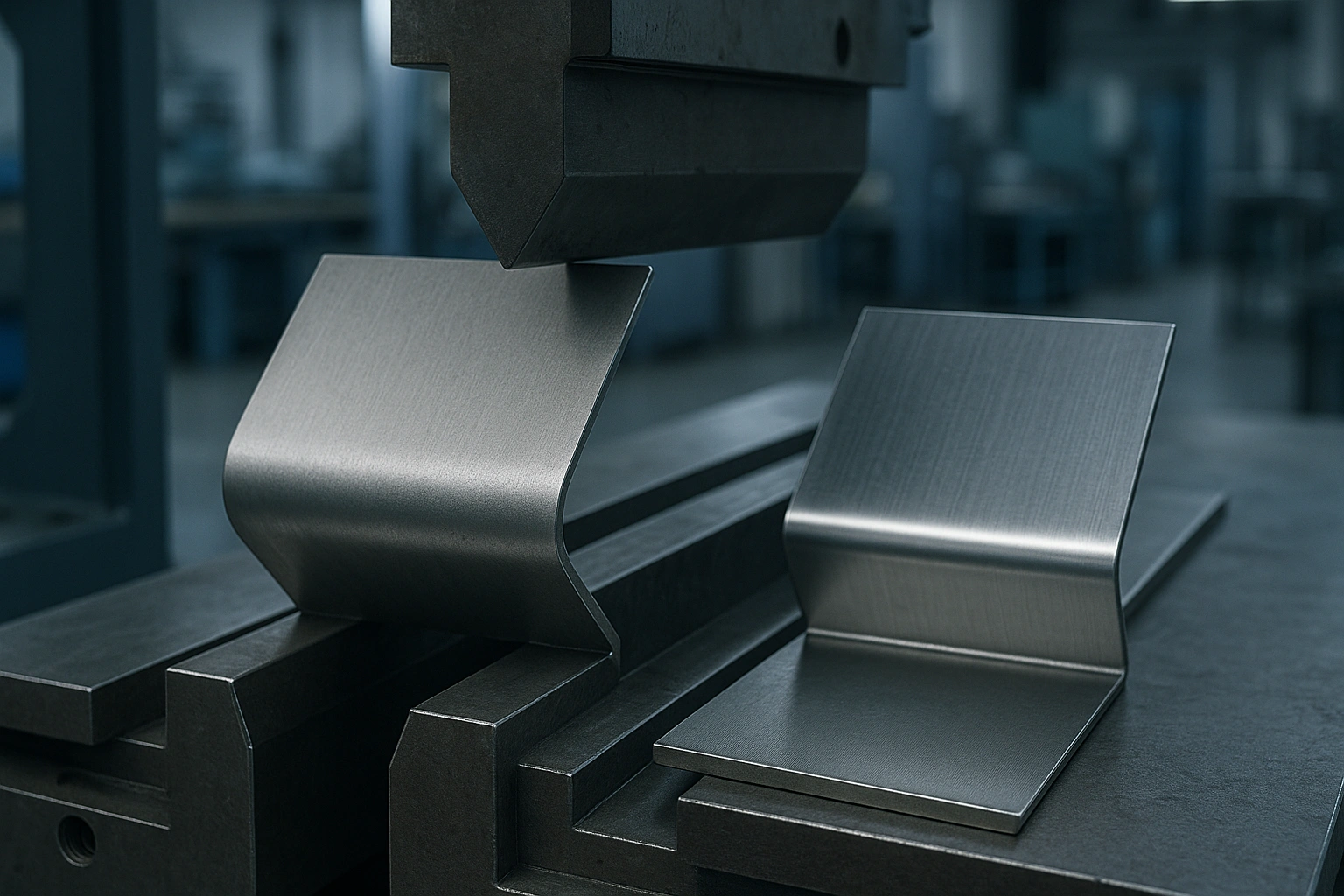
Le formage présente une courbe d’apprentissage différente. Le titane de grade 5, l'alliage que la plupart des marques de plein air utilisent pour son rapport résistance/poids, a une formabilité par étirement limitée et un retour élastique important. Là où vous pouvez plier l'acier inoxydable 304 autour d'un rayon de 2 × d'épaisseur sans problème, le grade 5 exige au moins 4,5 × à 5 × d'épaisseur pour éviter les fissures. Les zones soudées nécessitent des rayons encore plus grands. La conception de vos outils doit tenir compte de la compensation du retour élastique, ce qui signifie plus d'essais et d'erreurs que ce à quoi vous êtes habitué avec d'autres métaux.
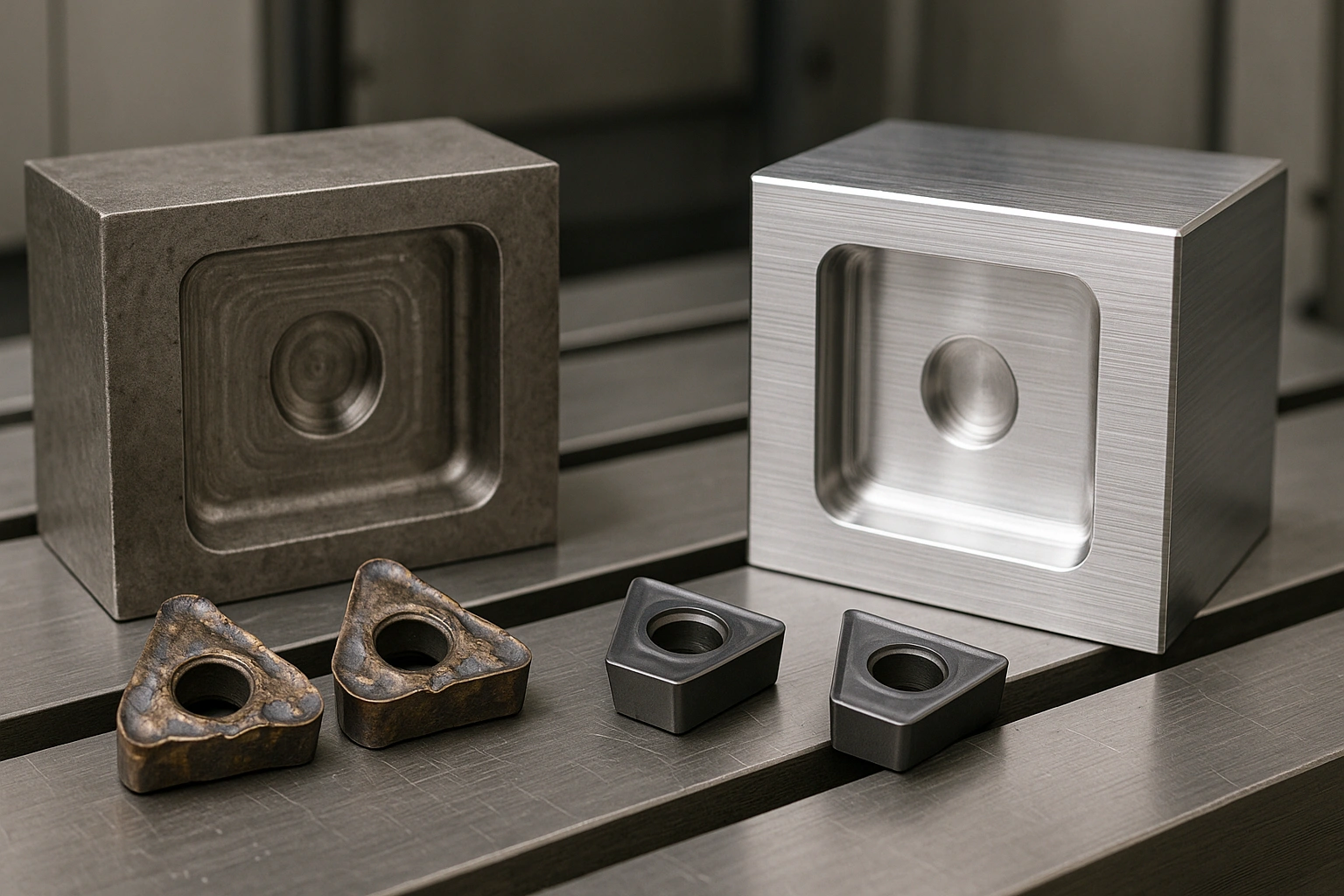
Surface finishing carries its own surprises. Bead-blasting titanium to a consistent matte finish requires tighter process control than with stainless—media type, grit size, pressure, and blast time all affect the result more dramatically. Anodizing for color (a popular aesthetic choice for consumer titanium products) depends on precise voltage control to hit specific oxide thicknesses. Small variations produce noticeably different hues across a production batch. Brands that assume “brushed titanium” or “anodized blue” will look the same from any supplier often find themselves managing aesthetic consistency issues six months into production.
The material behavior differences aren’t insurmountable, but they do require hands-on familiarity before you commit to manufacturing. A sample kit gives your engineers the chance to bend, machine, and finish actual material rather than discovering these characteristics during your first production run.
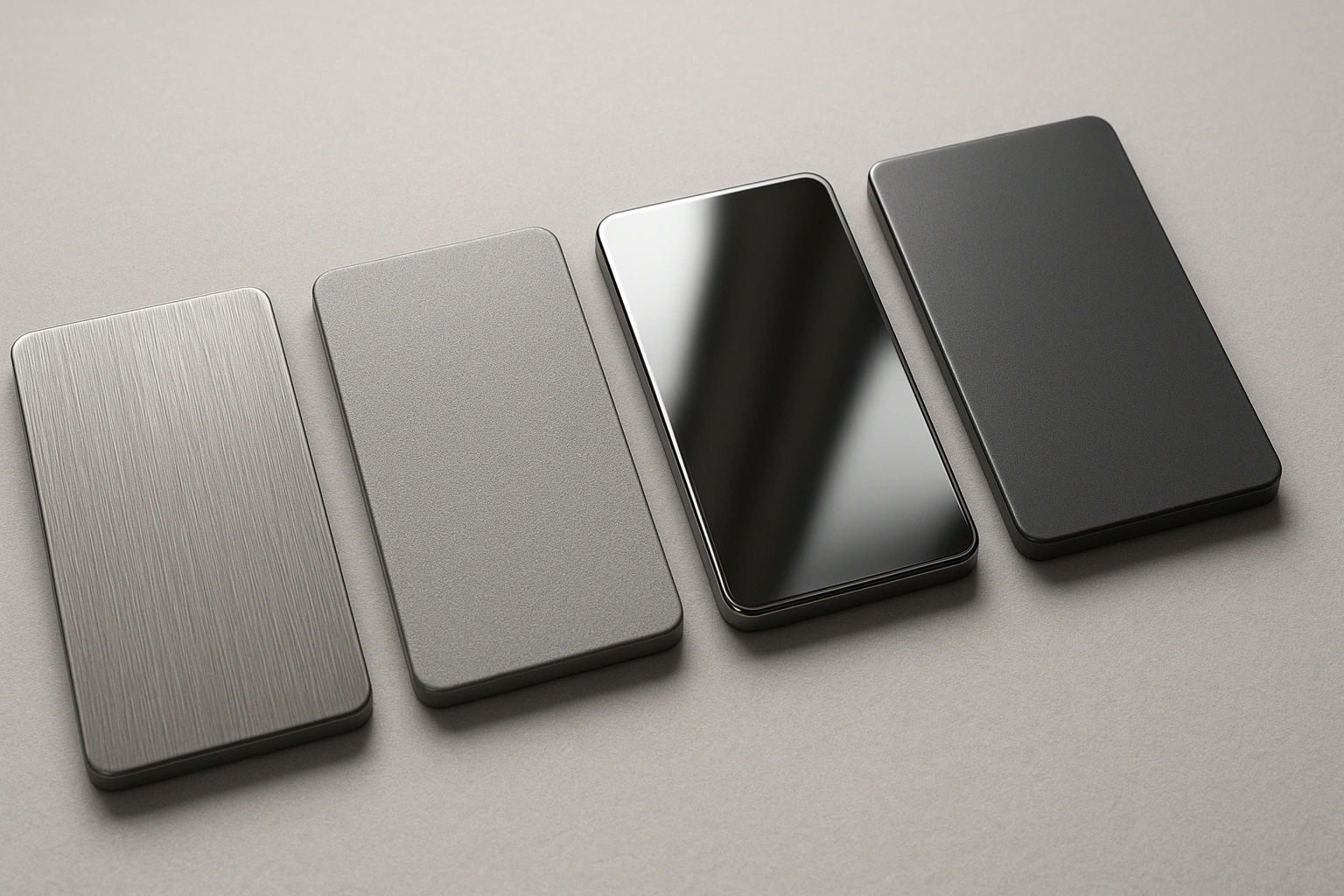
Figure 2: Surface finish variations on titanium dramatically affect both aesthetics and production consistency. From left: brushed, bead-blasted, polished, and anodized finishes. Each requires different process parameters and supplier capabilities—differences that become obvious through hands-on sample evaluation but are impossible to assess from spec sheets alone.
Contenu d'un kit d'échantillons complet
A well-structured titanium sample kit for outdoor product development should include physical specimens that let your team evaluate the material properties and processes that matter most to your production. Here’s what to request:
Grade 5 (Ti-6Al-4V) sheet and plate samples in multiple thicknesses. This alloy dominates outdoor hardgoods—tent stakes, cookware, bike components, multi-tools—because it offers the best balance of strength, weight, formability, and cost. Ask for coupons in the thickness range your products will use, typically 0.5mm to 3mm for ultralight gear, heavier gauges for structural components. Sheet samples let your engineers run bend tests at target radii and evaluate spring-back before committing to tooling designs.
Segments de barres rondes si vous développez des composants tournés ou usinés. Les barres se comportent différemment des tôles pendant l'usinage, et votre fabricant sous contrat souhaitera tester les avances, les vitesses et la géométrie des outils sur le matériau réel avant de proposer des taux de production. Même des longueurs courtes (50-100 mm) suffisent pour les premiers essais.
Surface finish coupons showing your target treatments. At minimum, request bead-blasted/satin, polished, and at least two anodized colors if you’re considering color finishes for consumer appeal. Each finish sample should be large enough (roughly 50mm × 50mm minimum) for your design team to evaluate aesthetic and tactile qualities. Critically, ask for boundary samples or high-resolution reference photos that document the exact media, grit, pressure, and blast parameters used. These become your spec reference when ordering production batches, preventing the common problem of finish variation between sample approval and scaled manufacturing.
Material certifications and documentation for every sample. Legitimate suppliers will provide certs referencing the exact ASTM or AMS specification for each product form—typically ASTM B265 or AMS 4911 for sheet/plate, ASTM B348 or AMS 4928 for bar. The cert should note the melt route (double-vacuum melt is standard for aerospace-grade material) and compliance details like DFARS if relevant. This documentation lets you verify material pedigree and gives your quality team the traceability they’ll need for production lots.
Comparison samples from multiple suppliers if you’re evaluating vendors. Order identical specifications from two or three suppliers and run parallel evaluations. You’ll quickly see differences in dimensional consistency, surface finish quality, documentation completeness, and lead time responsiveness. These differences are harder to detect from sales calls and pricing quotes but become obvious when you’re holding physical samples side by side.
The total cost for a comprehensive kit from a reputable supplier typically runs $300 to $800 depending on how many finish options and thickness variations you request. Lead time is usually one to three weeks. Given that a single production tooling revision can cost $5,000 to $20,000 and delay your launch by months, the sample kit is a rounding error in your development budget.
Figure 1: A comprehensive titanium sample kit includes sheet samples in multiple thicknesses, surface finish coupons (bead-blasted, polished, anodized colors), bar segments for machining trials, and complete material certifications. This organized presentation allows cross-functional teams to evaluate material properties, aesthetic options, and supplier quality before committing to production orders.
Comment les équipes utilisent des échantillons pour s'aligner et décider
One of the sample kit’s underappreciated benefits is how it accelerates internal alignment across functions that typically operate with different priorities and vocabulary. Product wants performance. Design wants aesthetics. Engineering wants manufacturability. Procurement wants cost control. Without a shared physical reference, those conversations stay abstract and create iteration loops late in development.
When samples arrive, your product manager can hold a 1.5mm Grade 5 sheet coupon and immediately feel the weight difference versus the steel alternative. Your designer can line up three bead-blast finish samples under different lighting and see which texture aligns with your brand’s premium positioning. Your engineer can run a quick bend test at a 4× radius and confirm whether your tent stake design needs geometry revisions before tooling. Your procurement lead can compare dimensional consistency and documentation quality across three suppliers and narrow the vendor shortlist based on observable differences rather than sales pitches.
These evaluations happen in days, not months. Instead of waiting for a full prototype build to discover that the specified finish doesn’t match your design intent, or that the material gauge creates forming challenges, you resolve those questions during the sample review meeting. Teams that skip this step end up making the same decisions later—but after committing to tooling, placing purchase orders, and setting launch timelines they can’t easily change.
The physical samples also serve as alignment artifacts for external partners. Send finish coupons to your contract manufacturer with clear boundary sample documentation, and they can dial in their blast process before your first production lot. Share material certs with your quality team early, and they can build inspection protocols around the correct specifications rather than scrambling to interpret documentation after parts arrive. Give your marketing team anodized samples to photograph for product launches, and the brand imagery will match what customers actually receive.
I’ve seen cross-functional teams reduce their development cycle by eight to twelve weeks simply by front-loading material evaluation. The time saved isn’t from faster work—it’s from eliminating rework, miscommunication, and late-stage surprises that cascade into schedule delays and budget overruns.
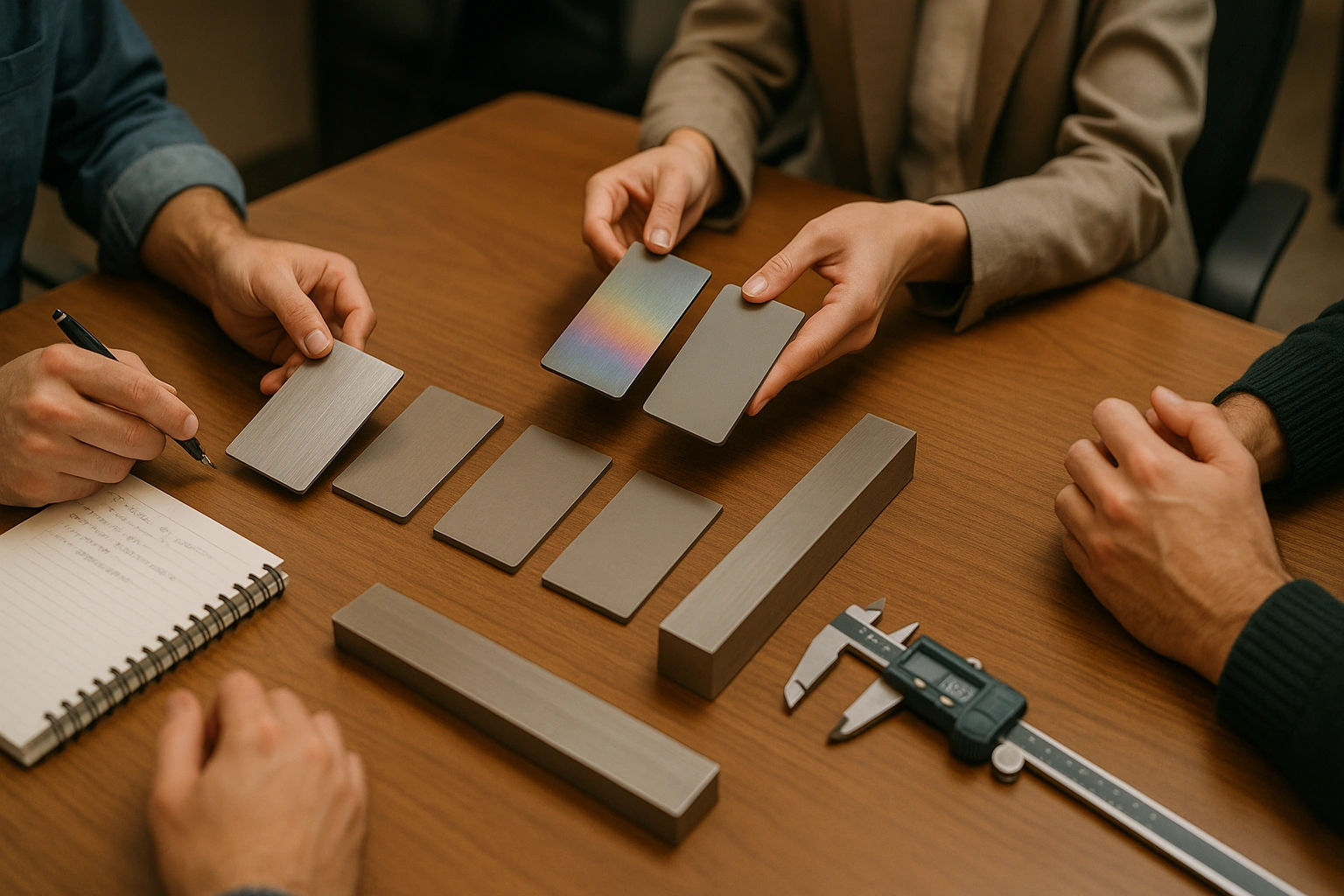
Figure 3: Cross-functional teams use physical samples to align on material selection, finish specifications, and supplier capabilities. Sample kits enable product, design, engineering, and procurement to make informed decisions collaboratively—reducing iteration cycles and preventing costly late-stage revisions during scaled manufacturing.
Ce que la qualité des échantillons révèle sur la capacité des fournisseurs
The samples you receive aren’t just material evaluation tools—they’re also a low-stakes stress test of your potential supplier’s capabilities, processes, and reliability. How a supplier handles a sample request often predicts how they’ll handle your production orders.
Dimensional consistency matters. If you request three sheet coupons at 1.5mm thickness and they arrive measuring 1.48mm, 1.52mm, and 1.50mm, that’s normal mill tolerance. If one measures 1.62mm, that signals weak inventory control or poor lot tracking. The same applies to surface finish. Three bead-blast coupons should look nearly identical under consistent lighting. Noticeable variation in texture or color indicates process inconsistency that will show up in your production batches.
Documentation completeness is an early-warning system. A capable supplier ships samples with material certs that tie each piece to its exact specification (ASTM B265 Grade 5, AMS 4911, etc.), note the melt route, and include compliance markers like DFARS if relevant. Missing, generic, or vague documentation suggests the supplier doesn’t maintain the traceability systems you’ll need for quality audits or regulatory compliance. If they can’t provide proper certs for a $400 sample order, they won’t magically develop those systems when you place a $40,000 production order.
Lead time responsiveness tells you how the supplier manages commitments. If they quote two weeks and deliver in ten days with proactive communication, that’s a positive signal. If samples arrive five weeks late with no explanation, expect the same pattern during production—and remember that production delays cascade into your entire launch timeline.
The supplier’s technical communication during the sample process is equally revealing. Do they ask clarifying questions about your intended application and recommend appropriate thickness ranges or finish options based on your product category? Or do they simply process the order transactionally without offering expertise? Suppliers who understand outdoor gear applications will recognize that tent stakes need different material properties than cookware, and they’ll proactively flag potential issues. That level of applied knowledge reduces your risk during scaled manufacturing.
If you’re evaluating multiple suppliers in parallel, these differences become starkly obvious. One supplier ships samples with complete certs and boundary sample photos in twelve days. Another ships samples three weeks late with incomplete documentation and noticeable finish variation. The pricing might be similar, but the operational risk profiles are entirely different. The sample evaluation process lets you observe those differences before you’re locked into a vendor relationship.
Premiers pas avec votre kit d'échantillons
If your team is entering titanium or evaluating new suppliers, start with a targeted sample request that covers your immediate development needs without overcomplicating the initial evaluation.
Request Grade 5 (Ti-6Al-4V) sheet samples in the thickness range your products will use—typically 0.5mm to 2.5mm for ultralight outdoor gear, heavier gauges for structural components. Ask for at least three finish options: bead-blasted/satin, polished, and one or two anodized colors if aesthetics matter for your product category. Specify that you need material certifications (ASTM B265 or AMS 4911) and boundary sample documentation for finishes. If you’re developing machined components, add bar stock samples in relevant diameters.
Order from two or three suppliers in parallel if you’re vendor shopping. The comparative evaluation will reveal differences in quality, documentation, responsiveness, and technical support that aren’t obvious from initial sales conversations. Budget $300 to $800 per supplier depending on sample variety.
When samples arrive, organize a cross-functional review session within the first week. Have your product, design, engineering, and procurement leads evaluate the samples together with clear criteria: dimensional accuracy, finish consistency, documentation completeness, and how well the material matches your product requirements. Run quick forming or machining trials if your team has the capability, even crude tests yield useful data about spring-back and tool wear.
Document your findings with photos, measurements, and notes tied to each supplier and sample type. These records become your reference for production specifications and supplier selection decisions. Share finish coupons and certs with your contract manufacturer early so they can plan process parameters and inspection protocols.
The brands that navigate titanium development most efficiently treat the sample kit as a required first step, not an optional nicety. That upfront diligence prevents the expensive, time-consuming surprises that derail product launches and erode team confidence. For a few hundred dollars and a couple of weeks, you gain the hands-on knowledge that spec sheets and supplier presentations can’t provide.