
Un manuel d'approvisionnement pratique pour les marques de plein air évaluant les partenaires OEM de tasses en titane, les MOQ et la structure des coûts à long terme.
Résumé exécutif
- Tasses en titane offrent des performances inégalées pour les équipements d'extérieur, principalement en raison de leur caractère léger et durabilité.
- Choisir le bon Partenaire OEM est critique, nécessitant une évaluation approfondie de leurs capacités techniques, de leurs structures de coûts et de leurs normes de conformité.
- Comprendre le processus de fabrication, de nuances de titane aux techniques de finition, est essentiel pour des décisions d'achat éclairées.
- L’optimisation des coûts implique une négociation stratégique du MOQ et une compréhension claire des facteurs de coûts unitaires.
- Ce guide fournit un cadre complet permettant aux marques de plein air de naviguer dans les complexités de Tasse en titane OEM approvisionnement efficace.
Introduction : Les vrais défis liés à l'approvisionnement en tasses en titane
Pour les marques de plein air, la sélection des matériaux pour les équipements essentiels comme les verres est primordiale. Les consommateurs exigent des produits non seulement fonctionnels, mais également exceptionnellement durables, légers et sûrs. C'est ici tasses en titane Excel, offrant une alternative supérieure aux matériaux traditionnels. Cependant, l'approvisionnement en produits spécialisés auprès de Verres OEM canaux présente des défis uniques. Les responsables des achats, les développeurs de produits et les fondateurs ont souvent du mal à identifier les produits fiables. fabricant de coupelles en titane partenaires, comprendre les structures de coûts complexes, assurer le contrôle de la qualité et naviguer dans les subtilités des chaînes d'approvisionnement internationales. Ce guide vise à démystifier le processus, en fournissant une feuille de route stratégique pour garantir une qualité élevée. Tasses en titane OEM qui correspondent aux valeurs de votre marque et aux attentes de vos clients. Nous approfondirons les aspects techniques, les considérations financières et les facteurs décisionnels critiques pour renforcer votre marque sur le marché concurrentiel du plein air.
Plongée technique approfondie
Grades de titane (G1, G2, G5) pour tasses
Les performances et le coût d'un tasse en titane sont considérablement influencés par la qualité de titane spécifique utilisée. Comprendre ces différences est crucial pour l’intégrité des produits et la sécurité des consommateurs.
- Grade 1 (CP1 – Titane commercialement pur) : Il s’agit de la qualité de titane la plus douce et la plus ductile, offrant une excellente formabilité et résistance à la corrosion. Il est souvent utilisé pour les applications où la ductilité est prioritaire, comme l'emboutissage profond. Bien qu'il convienne aux tasses, sa résistance inférieure peut conduire à des parois légèrement plus épaisses pour une durabilité équivalente par rapport aux qualités supérieures.
- Grade 2 (CP2 – Titane commercialement pur) : La qualité la plus couramment utilisée et la plus facilement disponible pour les applications industrielles générales, y compris les verres. Le grade 2 offre un bon équilibre entre résistance, ductilité et résistance à la corrosion. C’est un choix rentable pour tasses d'extérieur et tasses de camping en titane, offrant des performances robustes sans coût de matériaux excessif.
- Grade 5 (Ti-6Al-4V – Alliage Alpha-Bêta) : Connu sous le nom de « qualité aérospatiale », cet alliage est nettement plus résistant et plus dur que les qualités de titane commercialement pures. Il contient 6 % d'aluminium et 4 % de vanadium, qui renforcent ses propriétés mécaniques. Tout en offrant un rapport résistance/poids supérieur, son coût plus élevé et sa usinabilité plus difficile le rendent généralement moins courant pour les mugs standard, bien qu'il puisse être envisagé pour les produits spécialisés ultra-premium où la résistance ultime est une préoccupation majeure.
Processus de fabrication : formage, soudage, finition
Le parcours depuis la feuille de titane brute jusqu’au mug fini comporte plusieurs étapes précises.
1. Sélection et découpe des matériaux : Des feuilles de titane de haute qualité (généralement de grade 2) sont sélectionnées. Ces feuilles sont ensuite découpées avec précision en flans à l'aide de techniques telles que la découpe au laser ou l'estampage, formant ainsi la forme initiale du corps et de la poignée de la tasse.
2. Formation: Les ébauches subissent des processus d'emboutissage profond ou de filage pour former la forme cylindrique ou souhaitée du corps de la tasse. Cela nécessite des machines et une expertise spécialisées pour empêcher l’amincissement ou la fissuration du matériau. Les poignées sont souvent formées séparément par pliage ou estampage.
3. Soudage: Les composants du corps de la tasse et de la poignée sont assemblés à l’aide de techniques de soudage de précision. Soudage TIG (Tungsten Inert Gas) is commonly employed for titanium due to its ability to produce clean, strong welds with minimal contamination. Proper shielding gas (argon) is critical to prevent oxidation and ensure weld integrity.
4. Finishing: After welding, the mugs undergo various finishing processes. This can include:
- Recuit : Heat treatment to relieve internal stresses and improve ductility.
- Polishing/Grinding: To smooth weld seams and achieve the desired surface finish (e.g., brushed, polished, or sandblasted).
- Anodizing (optional): For color customization or enhanced corrosion resistance, though less common for standard tasses en titane due to titanium’s inherent properties.
- Laser Engraving/Branding: For adding logos or product information.
Field Benefits: Lightweight, No Coating, Corrosion Resistance
The inherent properties of titanium make it an ideal material for outdoor drinkware.
- Lightweight: Titanium possesses an exceptional strength-to-weight ratio. This makes tasses de camping en titane significantly lighter than their stainless steel counterparts, a critical factor for backpackers and outdoor enthusiasts where every gram counts.
- No Coating Required: Unlike aluminum, titanium does not require an internal coating to prevent leaching or reactivity with acidic beverages. This eliminates concerns about chemical exposure and peeling coatings, ensuring a pure taste experience.
- Corrosion Resistance: Titanium is highly resistant to corrosion, including saltwater and various acids. This makes tasses en titane incredibly durable and suitable for diverse outdoor environments, from humid forests to arid deserts, without rusting or degrading over time. It also contributes to the material’s longevity and hygienic properties.
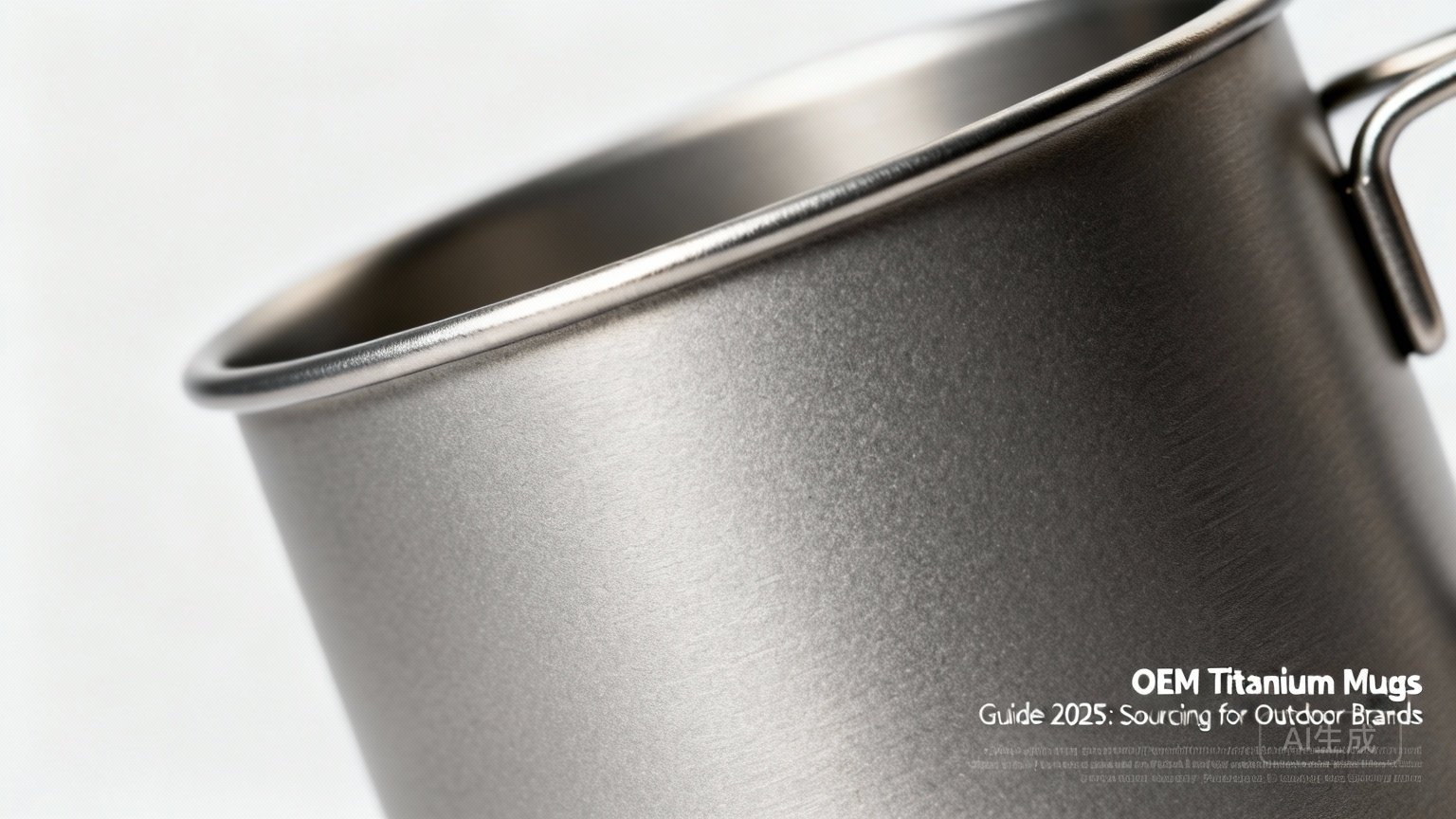
Cost & MOQ Breakdown
Per-Unit Cost Breakdown
Understanding the factors that contribute to the per-unit cost of an Tasse en titane OEM is essential for effective budgeting and negotiation.
- Coût des matières premières : This is typically the largest component. The price of titanium sheet metal varies based on global market demand, grade (Grade 1, 2, or 5), and thickness. Larger orders generally benefit from economies of scale in raw material purchasing.
- Travail de fabrication : This includes the cost of skilled labor involved in cutting, forming, welding, and finishing. More complex designs or intricate welding requirements will increase labor costs.
- Coûts d'outillage : For new designs or custom shapes, initial tooling (molds, dies) can be a significant upfront investment. This cost is usually amortized over the production run, meaning higher MOQs can reduce the per-unit tooling cost.
- Surface Treatment & Finishing: Specific finishes like sandblasting, polishing, or laser engraving add to the cost. Anodizing, if chosen, also incurs additional expense.
- Quality Control & Testing: Rigorous QC processes, including material testing and weld integrity checks, are vital but contribute to the overall cost.
- Conditionnement: Custom packaging, protective inserts, and branding on packaging add to the per-unit cost.
- Logistique et expédition : Freight costs, customs duties, and insurance all factor into the final delivered cost.
MOQ Logic (300–500 units)
Le Quantité minimale de commande (MOQ) for Tasses en titane OEM typically ranges from 300 to 500 units, though this can vary. This range is not arbitrary; it’s driven by several manufacturing and economic considerations:
- Tooling Amortization: Setting up production lines, especially for custom designs, involves significant fixed costs for tooling. An MOQ allows the manufacturer to spread these costs across a sufficient number of units, making the project economically viable.
- Material Procurement: Suppliers often have MOQs for raw titanium sheets. Ordering below a certain threshold can lead to higher material prices or even make it impossible to source certain specifications.
- Production Efficiency: Running a production line for a short period is less efficient. MOQs ensure that the setup and changeover times are justified by a substantial production run, optimizing labor and machine utilization.
- Economies of Scale: Larger orders enable manufacturers to purchase raw materials in bulk, negotiate better prices, and streamline their production processes, leading to lower per-unit costs for the client.
How to Optimize Titanium Mug Sourcing
To minimize costs and maximize value when sourcing Tasses en titane OEM:
- Standardize Designs: Opting for standard mug shapes or slightly modifying existing designs can significantly reduce or eliminate tooling costs.
- Negotiate MOQs Strategically: While MOQs are firm, discuss potential flexibility for reorders or if combining multiple product types could meet a supplier’s overall production threshold.
- Long-Term Partnerships: Building a strong relationship with a mug supplier can lead to better pricing, preferential treatment, and more flexible terms over time.
- Clear Specifications: Provide incredibly detailed technical drawings and material specifications. Ambiguity leads to rework, delays, and increased costs.
- Consolidate Orders: If you need multiple types of titanium products, try to bundle them with the same supplier to leverage higher overall order volumes.
- Evaluate Total Cost of Ownership: Don’t just look at the per-unit price. Consider quality, lead times, reliability, and the potential for defects, which can add significant hidden costs.
Choosing the Right OEM Partner
Selecting the ideal fabricant de coupelles en titane is paramount for the success of your Verres OEM project. A robust evaluation framework is essential.
The 3C Framework (Cost, Compliance, Capability)
1. Coût:
- Transparent Pricing: Does the supplier provide a clear breakdown of costs (material, labor, tooling, finishing, packaging, shipping)? Beware of opaque pricing.
- Value for Money: Is the price competitive given the quality of materials, manufacturing processes, and certifications offered? The cheapest option isn’t always the best long-term solution.
- Payment Terms: Are the payment terms reasonable and aligned with industry standards?
2. Conformité:
- Material Certifications: Can the supplier provide mill certificates for the titanium raw material, verifying its grade and composition? This is non-negotiable for product safety and quality.
- Environmental & Social Standards: Does the factory adhere to local and international environmental regulations? Are labor practices ethical and compliant with international standards (e.g., no child labor, fair wages)?
- Quality Management Systems: Does the manufacturer have certifications like ISO 9001 (Quality Management System)? This indicates a commitment to consistent quality.
- Export/Import Regulations: Are they knowledgeable about relevant customs, duties, and import regulations for your target markets?
3. Capability:
- Technical Expertise: Do they have proven experience with titanium fabrication, specifically deep drawing, welding, and finishing for drinkware? Ask for case studies or examples of similar products.
- Production Capacity: Can they meet your required volumes and timelines, both for initial orders and potential future scaling?
- Quality Control Processes: What QC measures are in place at each stage of production? Do they perform in-process checks, final inspections, and destructive/non-destructive testing?
- R&D and Customization: Do they have the ability to assist with product design, prototyping, and custom features if needed?
- Communication: Is their communication clear, timely, and professional? Language barriers or slow responses can lead to significant delays and misunderstandings.
Supplier Checklist
When evaluating potential titanium mugs OEM partners, use a structured checklist:
- Company Profile:
- Years in business specializing in titanium fabrication.
- Primary markets served (e.g., outdoor, medical, aerospace).
- Number of employees and factory size.
- Technical & Manufacturing:
- Expertise in specific titanium grades (G1, G2, G5).
- Welding techniques used (e.g., TIG, laser).
- Finishing capabilities (e.g., polishing, sandblasting, laser engraving).
- In-house tooling capabilities or trusted partners.
- Examples of previous titanium camping cup ou tasses d'extérieur projects.
- Quality & Compliance:
- ISO 9001 certification or equivalent.
- Material traceability and mill certificates.
- Detailed QC plan and inspection reports.
- Environmental certifications (e.g., ISO 14001) if applicable.
- Social compliance audits (e.g., SEDEX, BSCI) if required.
- Logistics & Support:
- Experience with international shipping and customs.
- Warranty and return policies.
- Dedicated account manager or project lead.
- Responsiveness to inquiries and issues.
- References:
- Request references from other B2B clients, ideally in the outdoor industry.

Material Comparison Table
To highlight the distinct advantages of titanium for outdoor drinkware, here’s a comparison with commonly used alternatives: stainless steel and aluminum.
| Fonctionnalité | Titanium (Grade 2) | Acier inoxydable (304/316) | Aluminum (6061/7075) |
|---|---|---|---|
| Poids | Très léger | Modéré à lourd | Léger |
| Force | Excellent Strength-to-Weight Ratio | High Strength | Moderate Strength |
| Corrosion Resist. | Exceptional (esp. saltwater) | Good (some grades better than others) | Good (but prone to pitting in certain conditions) |
| Réactivité | Non-reactive (no metallic taste) | Non-reactive (generally, can impart taste) | Highly reactive (requires liner/coating) |
| Durabilité | Extremely Durable, Dent/Scratch Resistant | Very Durable, Scratch Resistant | Prone to dents and scratches |
| Thermal Cond. | Low (good for insulation, but not vacuum sealed) | Moderate (poor for insulation unless vacuum sealed) | High (poor for insulation, cools/heats quickly) |
| Coût | Haut | Modéré | Faible |
| Maintenance | Easy (dishwasher safe, no special care) | Easy (dishwasher safe, no special care) | Easy (if coated, care for coating) |
| Typical Use | Premium Outdoor/Camping Gear | General Drinkware, Kitchenware | Budget Outdoor Gear, Water Bottles (often coated) |
Real Brand Use Cases (Outdoor Mug Examples)
Several prominent outdoor brands have successfully integrated Tasses en titane OEM into their product lines, leveraging titanium’s unique properties to appeal to their target demographics.
- Ultralight Backpacking Brands: Brands focusing on “fast and light” expeditions often feature titanium mugs. Their customers prioritize minimal weight above all else. A single-wall titanium mug, often weighing under 50 grams, becomes a cornerstone product, valued for its ability to reduce pack weight without compromising durability. These brands might offer mugs with foldable handles or optimized stacking designs.
- High-End Camping & Overlanding Brands: For brands catering to a more affluent market segment that values premium materials and longevity, titanium mugs are positioned as a lifetime investment. These might include double-wall insulated titanium mugs for extended temperature retention or mugs with specialized lids and ergonomic handles. The emphasis here is on the mug’s resilience to harsh conditions and its non-reactive nature, ensuring a pure taste experience even after years of use.
- Specialty Adventure Brands: Companies that equip customers for extreme environments, such as mountaineering or arctic expeditions, often opt for titanium. In these scenarios, the material’s resistance to extreme temperatures, corrosion from elements like snow and ice, and its inherent strength against accidental drops are critical selling points. The “no-coating” benefit is also highlighted for health and safety in remote areas where replacement options are scarce.
These brands understand that while the initial cost of titanium is higher, the long-term benefits in terms of performance, durability, and brand perception justify the investment. They effectively communicate the value proposition of a titanium camping cup—it’s not just a mug, but a piece of essential, reliable gear.
Common Mistakes in Titanium Mug Procurement
Navigating the Tasse en titane OEM landscape can be complex. Avoiding common pitfalls is crucial for a smooth and successful procurement process.
Drapeaux rouges de qualité
- Inconsistent Material Quality: Receiving mugs where the titanium feels unusually heavy, shows inconsistent surface finishes, or has visible impurities. Always request mill certificates for each batch of raw material.
- Poor Weld Integrity: Visible, uneven, or porous welds are a major red flag. These indicate weak points that can lead to leaks or structural failure. Strong, clean TIG welds are essential.
- Dimensional Inaccuracies: Mugs that deviate from specified dimensions, leading to issues with stacking, lid fit, or overall product consistency. This indicates lax quality control during manufacturing.
- Surface Imperfections: Excessive scratches, dents, or uneven finishes that are beyond acceptable cosmetic standards. While titanium is durable, poor handling during manufacturing can still cause damage.
- Metallic Taste/Odor: Although rare with pure titanium, a persistent metallic taste or odor could indicate contamination during the manufacturing process or the use of an inferior alloy.
Lead Time Delays
- Unrealistic Expectations: Brands often underestimate the time required for tooling, prototyping, material sourcing, and production, especially for custom designs.
- Poor Communication: Lack of clear, consistent communication with the fabricant de coupelles en titane can lead to misunderstandings, rework, and missed deadlines.
- Raw Material Shortages: Global supply chain disruptions or unexpected demand surges for titanium can impact lead times. A reliable mug supplier should proactively communicate potential delays.
- Insufficient QC Planning: Discovering quality issues late in the production cycle necessitates rework, which directly impacts lead times. Implement robust QC checks at every stage.
- Customs and Shipping Issues: Unforeseen delays at customs, port congestion, or issues with shipping documentation can significantly extend delivery timelines. Work with suppliers who have strong logistics experience.
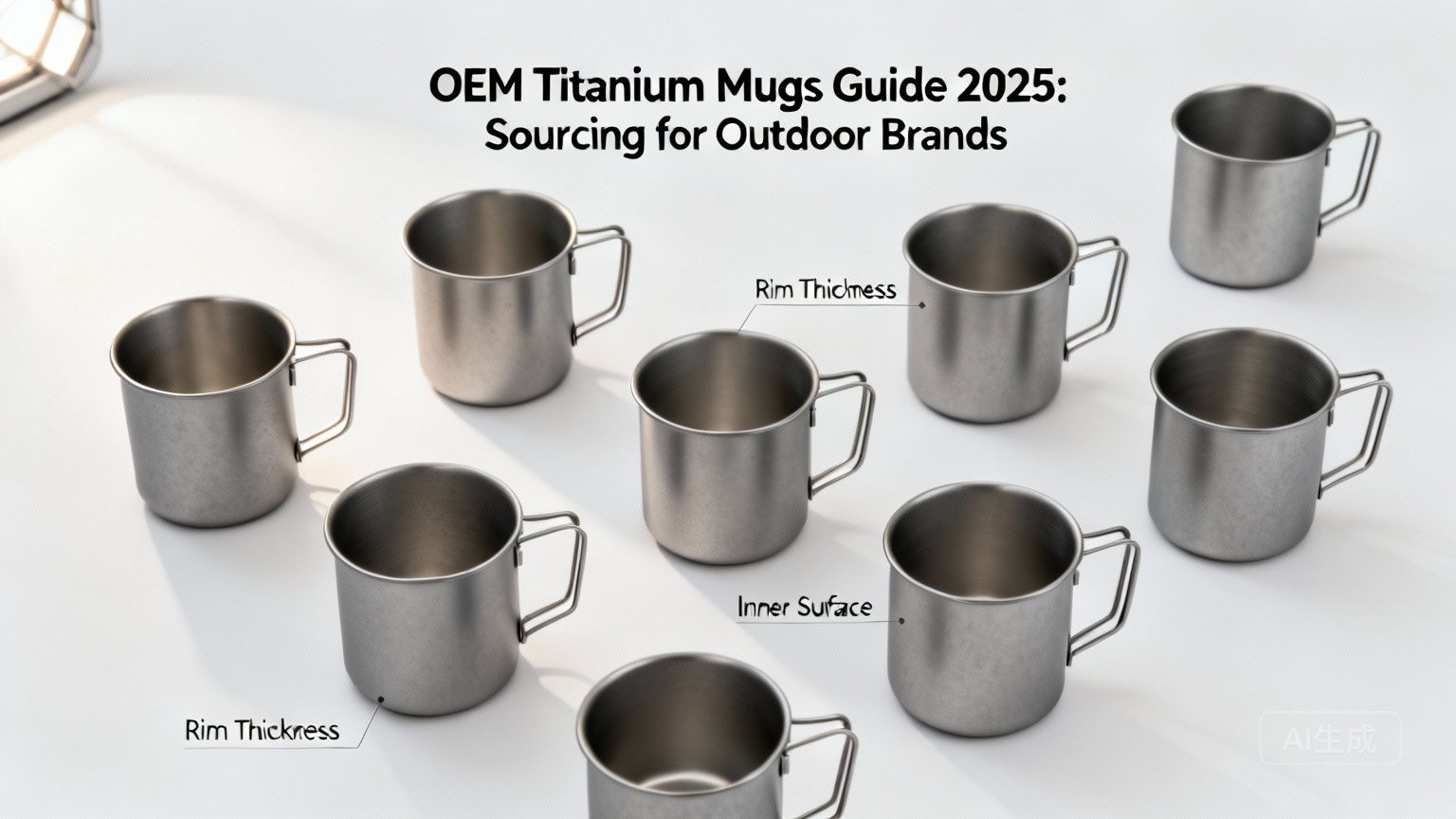
Conclusion + Request a free OEM sample kit
The decision to invest in Tasses en titane OEM for your outdoor brand is a strategic one, promising unparalleled performance and customer satisfaction. By understanding the technical nuances of titanium grades and manufacturing processes, meticulously evaluating cost structures and MOQs, and diligently selecting a partner based on our 3C Framework (Cost, Compliance, Capability), you can confidently navigate the complexities of global sourcing. Avoid common pitfalls like quality red flags and lead time delays by prioritizing clear communication and rigorous quality control. Ultimately, partnering with the right fabricant de coupelles en titane will enable you to deliver superior tasses d'extérieur that resonate with your target market and reinforce your brand’s commitment to quality and innovation.
Ready to explore the possibilities for your brand?
Request a free OEM sample kit today to experience the quality and craftsmanship firsthand.
7 Industry-Searchable FAQs
Q1: Why are titanium mugs more expensive than stainless steel or aluminum mugs?
Tasses en titane are generally more expensive due to the higher cost of raw titanium material, which is a specialized metal with a complex extraction and processing chain. Additionally, manufacturing titanium requires specialized machinery and expertise, particularly for welding and forming, further contributing to the overall production cost compared to more common metals like stainless steel or aluminum.
Q2: Is titanium safe for drinking? Does it impart a metallic taste?
Yes, titanium is extremely safe for drinking. It is a biocompatible material, meaning it does not react with the human body or food/beverages. Unlike some metals, it does not leach chemicals or impart any metallic taste or odor to your drinks, ensuring a pure and clean taste experience. This is one of its key advantages for Verres OEM.
Q3: What is the typical lead time for an OEM order of titanium mugs?
Typical lead times for Tasse en titane OEM orders can vary significantly based on design complexity, order quantity, and the manufacturer’s current production schedule. Generally, expect anywhere from 8 to 16 weeks from confirmed order to delivery. This includes time for raw material procurement, tooling (if custom), production, quality control, and shipping.
Q4: Can titanium mugs be customized with a brand logo?
Absolutely. Tasses en titane OEM can be customized with brand logos and other designs. The most common and durable method is gravure au laser, which etches the design directly into the titanium surface, making it permanent and resistant to wear. Other options might include custom finishes or handle designs.
Q5: What is the standard MOQ (Minimum Order Quantity) for OEM titanium mugs?
The standard MOQ for OEM titanium mugs typically ranges from 300 to 500 units. This quantity allows manufacturers to efficiently amortize tooling costs, optimize raw material purchases, and streamline production runs. Some manufacturers might offer lower MOQs for simpler designs or higher MOQs for very complex, custom projects.
Q6: How do I ensure the quality of titanium mugs from an overseas manufacturer?
To ensure quality, it’s crucial to: (1) request mill certificates for every batch of raw titanium, confirming the grade and composition; (2) establish a detailed Quality Control (QC) plan that includes incoming material checks, in-process inspections, and final inspections against agreed AQL standards; (3) use third-party inspectors for pre-shipment inspections on high-value orders; and (4) start with a pilot order before committing to large-volume tooling and PO commitments.
Q7: Are titanium mugs suitable for both hot and cold drinks?
Yes. Single-wall tasses de camping en titane are excellent for boiling water and handling hot drinks in the field, but the wall can become hot, so handles or pot lifters are recommended. Double-wall insulated titanium mugs are designed for comfortable handholding and better temperature retention for both hot coffee and cold beverages. When specifying your OEM project, clarify whether you need single-wall (ultralight / cooking) or double-wall (insulated / comfort) so your titanium mug supplier can recommend the right construction.