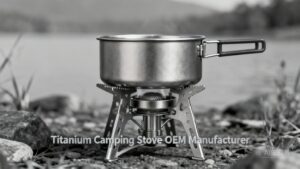
Beneficios de los utensilios de cocina para acampar de titanio: rendimiento del material, valor de fabricación y ventajas del OEM
Executive Summary: Engineering the Trade-off Between Mass and Durability
In the outdoor equipment sector, the “Iron Triangle” of product engineering typically forces a compromise between weight, durability, and cost. Titanium disrupts this conventional trade-off. For Product Managers and OEM buyers, titanium represents a strategic material choice that allows for the creation of “Ultralight” product lines without sacrificing structural integrity.
It is not merely a premium alternative; it is an engineering solution to the specific constraints of backcountry logistics. This article analyzes the technical advantages of titanium cookware from a B2B perspective, evaluating its mechanical properties and manufacturing implications.
For decades, aluminum and stainless steel dominated the market. Today, titanium’s unique properties allow brands to capture the high-margin “Ultralight” segment.
Strength-to-Weight Ratio: Performance Under Field Constraints
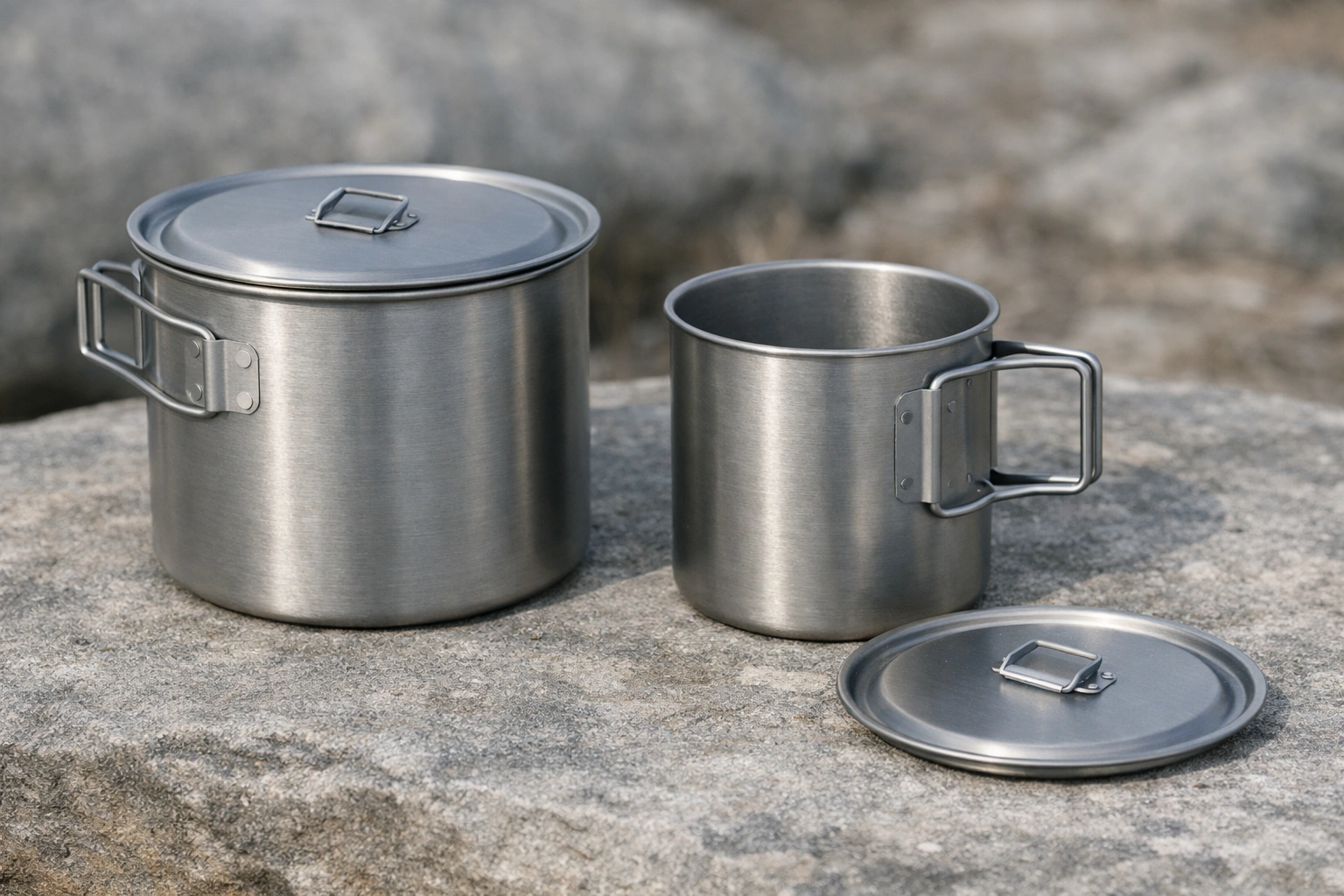
The primary driver for titanium adoption in outdoor gear is its specific strength. While often marketed simply as “lightweight,” the engineering reality is more nuanced.

Density vs. Structural Integrity
Commercially Pure (CP) Titanium (typically ASTM B265 Grade 1 or Grade 2) has a density of approximately 4.51 g/cm³.
- vs. Stainless Steel (304): Titanium is roughly 45% lighter than steel (density ~7.9 g/cm³) while maintaining comparable tensile strength.
- vs. Aluminum (3003): While aluminum is lighter (~2.7 g/cm³), its tensile strength is significantly lower. To achieve the same structural rigidity as a titanium vessel, an aluminum pot requires significantly thicker walls.
The Wall Thickness Advantage: For OEM designers, titanium’s high strength allows for aggressive wall thinning. Standard titanium camping pots are successfully deep-drawn with wall thicknesses between 0.3mm and 0.4mm, minimizing pack weight without deformation risk.
Corrosion Resistance & Environmental Stability
Outdoor cookware is subjected to uncontrolled environments: salt spray, humidity, and acidic foods. Material degradation is a common cause of warranty claims.
Titanium’s corrosion resistance is intrinsic. Upon exposure to oxygen, the metal forms a stable Titanium Dioxide ($TiO_2$) passive layer. This ceramic-like barrier renders the surface chemically inert, making it immune to pitting corrosion in marine environments and non-reactive to acidic camp foods (tomatoes, vinegar).
Thermal Behavior & Cooking Implications
Titanium’s thermal properties are often misunderstood. It is not a “good” conductor of heat; rather, it is a “strategic” conductor.

Low Thermal Conductivity (~16 W/m·K)
Titanium conducts heat significantly slower than aluminum (~205 W/m·K).
- Advantage: Boiling Efficiency. In water-boiling applications (freeze-dried meals), titanium minimizes lateral heat loss through sidewalls. Heat is directed vertically, improving fuel efficiency.
- Advantage: User Safety. A titanium mug filled with hot coffee will have a cooler rim than an aluminum equivalent, reducing burn risk and eliminating the need for plastic lip guards.
Manufacturing & Design Advantages for OEM Brands
From a manufacturing perspective, titanium presents challenges but also offers unique design opportunities.
Using advanced deep drawing techniques and vacuum annealing, manufacturers can create seamless, single-piece vessels. The material accepts premium surface treatments like Crystallization (“Ice Flower”) without the need for plating, ensuring a unique aesthetic that competitors using aluminum cannot replicate.
Durability, Lifecycle, and Cost Considerations
While raw material costs are higher, the Total Cost of Ownership (TCO) justifies the investment for premium product lines.
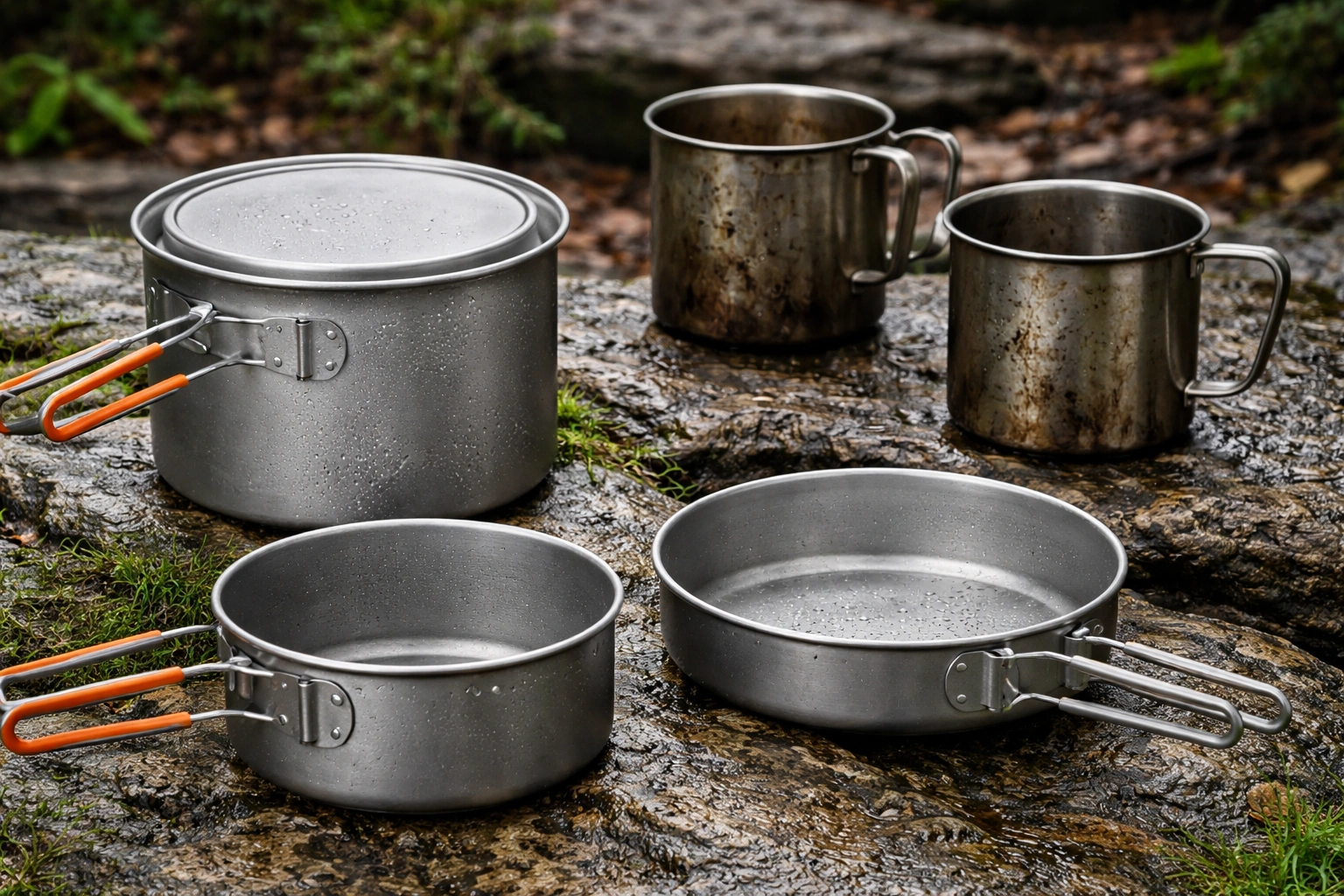
Fatigue Resistance: Titanium has a lower Modulus of Elasticity (~110 GPa) compared to steel. It is more “springy.” A titanium pot packed tightly in a rucksack absorbs elastic deformation and returns to shape, whereas aluminum suffers plastic deformation (denting).
- Aluminum Lifecycle: 2-5 years (coating wear, denting).
- Titanium Lifecycle: 10-20+ years (indefinite structural life).
Compliance & Food-Contact Safety
In the context of international export, titanium simplifies the compliance landscape. Uncoated, pure titanium cookware generally passes FDA (US) and LFGB (EU) migration testing with wide margins. By eliminating non-stick coatings (PTFE), OEM buyers avoid regulatory scrutiny surrounding “forever chemicals,” future-proofing the product line.
Conclusion: Strategic Value for Outdoor Brands
For the OEM buyer, titanium camping cookware is not simply a lighter version of steel cookware; it is a distinct product category. By leveraging titanium’s high strength-to-weight ratio and intrinsic safety, brands can engineer equipment that reduces pack weight while increasing reliability.
While material costs are higher, the reduction in warranty claims and the premium market positioning provide a compelling ROI.
Ready to develop your own ultralight product line?
Acción: Descarga nuestro Factory Audit Checklist or request a quote for Titanium OEM Manufacturing.