Titanium Bottle OEM Guide: Material, Manufacturing, Branding & Supplier Strategy
In the competitive landscape of outdoor gear and hydration, titanium bottles have emerged as a premium offering, coveted for their unrivaled durability, lightweight properties, y corrosion resistance. For retailers, hydration brands, and e-commerce sellers, venturing into Original Equipment Manufacturer (OEM) titanium bottle production presents a strategic opportunity to differentiate and capture a discerning market segment.
This comprehensive guide explores the full titanium bottle OEM workflow—from material science and manufacturing to branding and supplier selection—giving you a complete roadmap for bringing titanium drinkware to market.
Understanding Titanium: The Material of Choice
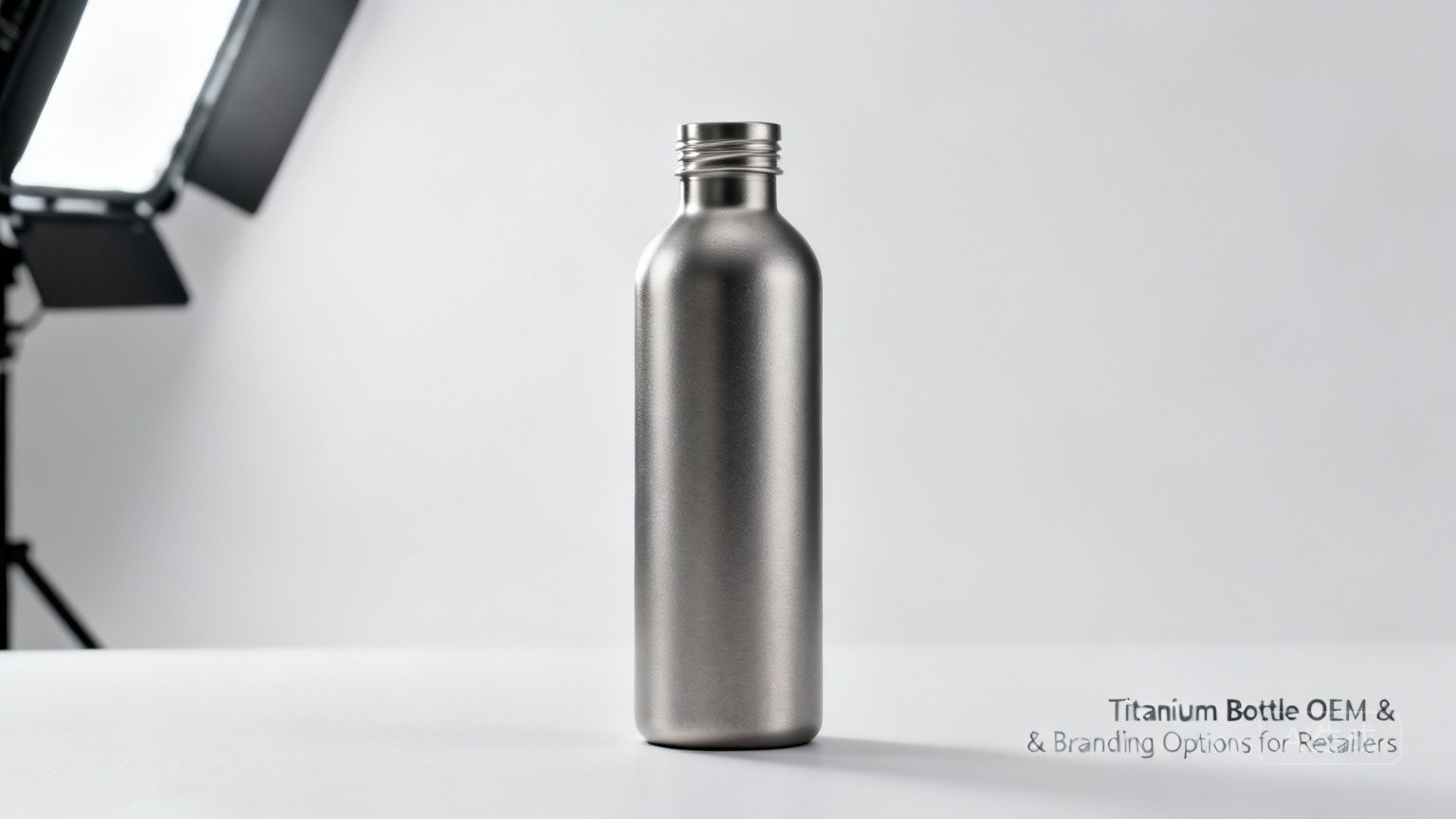
Titanium is a transition metal renowned for its exceptional strength-to-weight ratio and biocompatibility. Its unique properties make it an ideal material for high-performance drinkware, surpassing stainless steel or aluminum in many categories.
Key Titanium Material Grades for Bottle Manufacturing
Not all titanium is created equal—each grade has unique effects on cost, strength, formability, and aesthetics.
- Grade 1 (CP1): Softest, most ductile. Best for deep drawing seamless bottles.
- Grade 2 (CP2): Most widely used. Strong, ductile, weldable, and cost-effective.
- Grade 3 (CP3): Higher strength, lower ductility—used when durability is more important than shape complexity.
- Grade 4 (CP4): Strongest CP grade, limited formability—not ideal for bottle forming.
For most OEM hydration products, Grade 1 and 2 deliver the best balance of cost, formability, and performance.
The Manufacturing Process: From Sheet to Bottle
Deep Drawing: Forming the Bottle Body
The seamless titanium bottle body is created through multi-stage deep drawing:
- Blank Preparation: Titanium sheet is cut to circular blanks.
- Progressive Drawing: Multiple draw dies form the cup shape without tearing.
- Annealing: Heat treatment restores ductility between draws.
- Trimming: The top edge is trimmed to final height.
Welding: Joining Components
- Soldadura TIG: Most common; requires strict contamination control.
- Soldadura láser: High precision with minimal distortion.
Surface Finishing
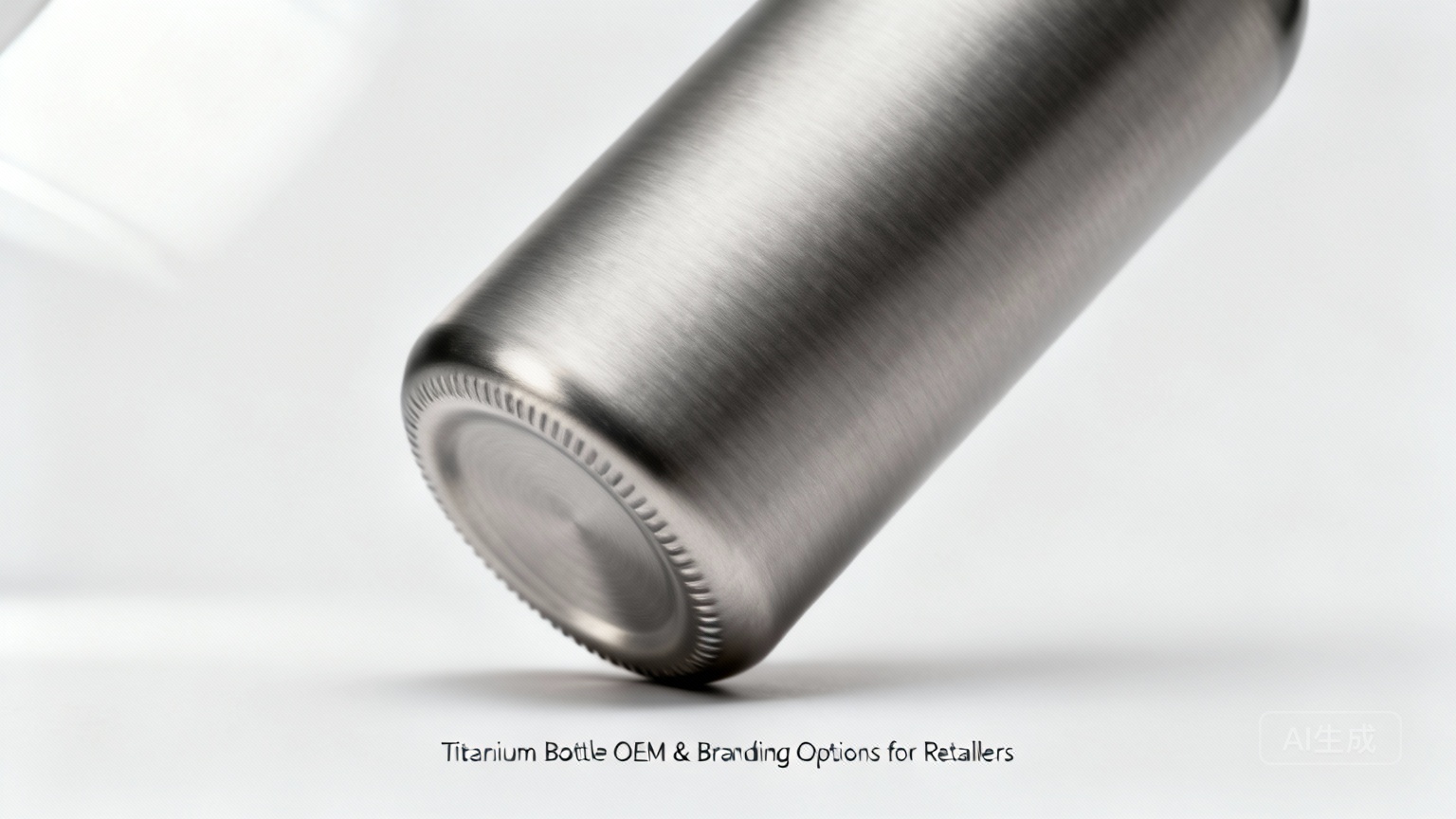
- Polishing: Mirror-like, premium aesthetic.
- Brushing: Satin finish hides fingerprints.
- Bead Blasting: Matte, rugged outdoor look.
- Anodizado: Titanium oxide coloration—scratch-resistant and dye-free.
Cost Structure and Minimum Order Quantity (MOQ) Logic
Factors Influencing Unit Cost
- Material Grade & Thickness
- Design Complexity
- Manufacturing Steps (deep drawing, welding, finishing)
- Anodizing or special surface finishes
- Quality Control requirements
- Order Volume
Minimum Order Quantity (MOQ)
Typical titanium bottle MOQs: 500–2000 units.
Branding Options: Making It Yours
Grabado láser
- Sharp details
- Permanent and wear-resistant
- Works on all finishes
Anodizing
- Vibrant oxide colors
- Scratch-resistant
- Gradient effects possible
Embalaje
- Custom printed boxes
- Sustainable materials
- Brand storytelling
Supplier Evaluation & Quality Control
- Experience with titanium forming/welding
- Equipment sophistication
- ISO certifications
- Transparent communication
- References + sample inspection
QC Stages
- Incoming material inspection
- In-process checks
- Weld integrity tests
- Final functional tests: leak, drop, weight, packaging
OEM Workflow Roadmap
- Concept & Design
- Supplier Sourcing
- Prototyping & Tooling
- PPS Approval
- Producción en masa
- Shipping & Logistics
- Post-Production Feedback
Expert Insights: Why Titanium Matters
“In a market saturated with hydration solutions, titanium offers true differentiation—premium, durable, sustainable, and high-performance.”
Feature Comparison Table
| Característica | Titanio | Acero inoxidable | Aluminio | Plástico |
|---|---|---|---|---|
| Peso | Extremely Lightweight | Moderate–Heavy | Lightweight | Very Light |
| Durabilidad | Exceptional | Bien | Bajo | Moderado |
| Corrosión | Excelente | Bien | Bien | Excelente |
| Taste Neutrality | Highest | Bien | OK | Bajo |
| Biocompatibility | Excelente | Bien | Moderado | Bien |
| Heat Retention | Moderate/Excellent | Moderate/Excellent | Poor | Poor |
| Price | Alto | Mid–High | Low–Mid | Muy bajo |
| Sostenibilidad | Alto | Alto | Medio | Bajo |
The Future of Hydration: Embrace Titanium
Entering the titanium bottle OEM market represents a strategic move for brands seeking a premium, long-lasting, and sustainable product line.