
Indledning
You’re six months into a titanium OEM program. The design is locked. Your supplier sent a promising feasibility study. Finance approved the business case. Engineering committed to a launch timeline.
Then procurement comes back with quotes that are 40% higher than budgeted.
Or your lead supplier admits they can’t hit the tolerances you specified.
Or a sanctions update disqualifies your raw material source.
The program dies. Not in production, where at least you’d have learned something tangible—but in the planning phase, after you’ve burned budget, credibility, and calendar time.
This isn’t rare. Across aerospace, medical device, and industrial OEM sectors, roughly 70% of titanium programs either get cancelled or require fundamental restructuring before they ever cut metal at scale. The failure isn’t usually dramatic. It’s a quiet acknowledgment in a conference room: the numbers don’t work, the timeline was fiction, or the supplier can’t actually do what they claimed.
Here’s what I’ve learned after watching more than 150 titanium programs over 18 years: most of these failures are predictable. The root causes show up in the same places, program after program. Teams overlook them because titanium has a halo—it’s the premium material, so there’s an assumption that premium suppliers and premium budgets will sort things out. They don’t.
What Kills Projects: The Visible Triggers
When a titanium program gets cancelled, leadership typically points to one of three things: cost overruns, schedule slips, or supplier failures. These are real problems, but they’re symptoms, not causes.
Cost Overruns That Invalidate the Business Case
The initial budget assumed titanium would cost X per kilogram, machining would take Y hours per part, and tooling would require Z dollars. Then quotes come back at 1.4X, 2Y, and 3Z. Suddenly the unit economics don’t support the program. The CFO asks why the estimates were so far off. The answer is usually that the estimates were built on general industry benchmarks or supplier marketing claims rather than detailed process validation.
I’ve seen aerospace programs budgeted at $450 per pound of machined titanium alloy discover the real number is $720 when you account for tool wear, coolant management, inspection protocols, and the 70% buy-to-fly ratio on complex geometries. Medical device programs assume Grade 5 bar stock costs are equivalent to stainless, then learn titanium forgings require 6-month lead times and minimum order quantities that blow up inventory holding costs.
Schedule Delays That Push Launch Beyond Market Windows
The Gantt chart showed 14 months from design freeze to production release. But it didn’t include realistic lead times for raw material procurement (often 4-6 months for mill products), first-article inspection cycles (8-12 weeks when you factor in re-cuts), or supplier qualification audits (3-6 months if you need AS9100 or ISO 13485 certification). By month 10, the program is six months behind, and the market window or contractual commitment is gone.
One defense contractor I advised built a timeline assuming their titanium casting supplier could deliver first articles in 90 days. The supplier’s actual queue time was 120 days before they even started the tooling. The program missed its gate review and got shelved.
Supplier Capability Mismatches
A supplier says they can hold ±0.002″ on a thin-walled titanium housing. They’ve done it on aluminum and stainless. But titanium’s thermal conductivity and work-hardening behavior mean their existing process won’t transfer. They discover this after you’ve paid for tooling.
Or you learn your chosen mill doesn’t actually stock the grade and temper you specified—they’d have to special-order it, which adds lead time and cost. Or the forge shop that quoted your part has never worked with the alloy system your engineer selected, and they’re unwilling to commit to mechanical property guarantees.
These are the visible reasons programs die. But they all trace back to a smaller set of underlying failures in how teams plan, validate, and budget titanium work.
The Root Causes Hiding Below the Surface
If you track failed titanium programs back to their origins, you find the same handful of mistakes repeating. They’re not exotic. They’re mundane failures of due diligence that get papered over by optimism, schedule pressure, or the assumption that “someone else has validated this.”
Unrealistic Design-for-Manufacture Assumptions
Engineers design parts based on what titanium can theoretically do, not what a given supplier can reliably produce at the volume and cost you need. A CAD model shows a 1.5mm wall thickness on a deep-drawn vessel. It’s within the material’s formability range. But the supplier’s tooling, press capacity, and process control may only be validated down to 2.0mm. The difference between theoretical and practical manufacturability kills programs.
Titanium’s work-hardening and springback characteristics are well documented, but if your design team hasn’t worked with it before, they’ll specify features that assume steel-like behavior. Tight-radius bends, thin ribs, and complex geometries that are routine in stainless become engineering challenges in titanium—and those challenges convert to cost and schedule risk.
Supplier Capability Gaps Masked by Optimistic Quotes
Suppliers want the work. They’ll bid on jobs that are at the edge of—or slightly beyond—their demonstrated capability, betting they can figure it out once the PO is signed. If you don’t verify their claims with process audits, sample runs, or reference customers working in the same alloy and tolerance range, you’re trusting a sales pitch.
I’ve reviewed RFQ responses where suppliers claimed “+/-0.001” machining capability on titanium without any documented Cpk data for that tolerance in the specified alloy. When pressed, they admitted it was aspirational. But by then the program had been sold to leadership based on those numbers.
Underestimating Special Process and Tooling Costs
Titanium isn’t stainless steel with better properties. It requires specialized tooling (carbide or CBN inserts that cost 3-5x more and wear faster), high-pressure coolant systems to manage heat, inertization for welding, and contamination controls during forming and heat treatment. If your cost model doesn’t line-item these, you’re underbudgeting by 25-40%.
Casting and forging programs often overlook the cost and lead time for titanium-specific tooling. Dies and molds that handle titanium’s reactivity and temperature profiles are not off-the-shelf items. First-article tooling can run $150K-$500K depending on part complexity, and revisions add months.
Regulatory and Sanctions Blindspots
Titanium’s supply chain is geopolitically concentrated. VSMPO-AVISMA in Russia is one of the world’s largest producers. After the Ukraine invasion, Western aerospace OEMs faced sudden sourcing restrictions. Programs that had locked in Russian-origin material found themselves scrambling for alternatives—or applying for sanctions waivers that might or might not be granted.
In 2024, Canada temporarily granted Airbus a waiver to keep using Russian titanium to protect jobs, but that’s the exception. Most programs don’t get waivers. If your supply chain includes sanctioned sources and you haven’t pre-qualified alternatives, a policy shift can kill your program overnight.
Even outside sanctions, export controls (ITAR, EAR) and traceability requirements (AS9100, ISO 13485) add documentation, audit, and first-article inspection overhead that teams routinely underestimate. A program that looks viable on a technical and cost basis can still fail if the compliance burden wasn’t modeled.
Supply Chain: The Concentrated Risk
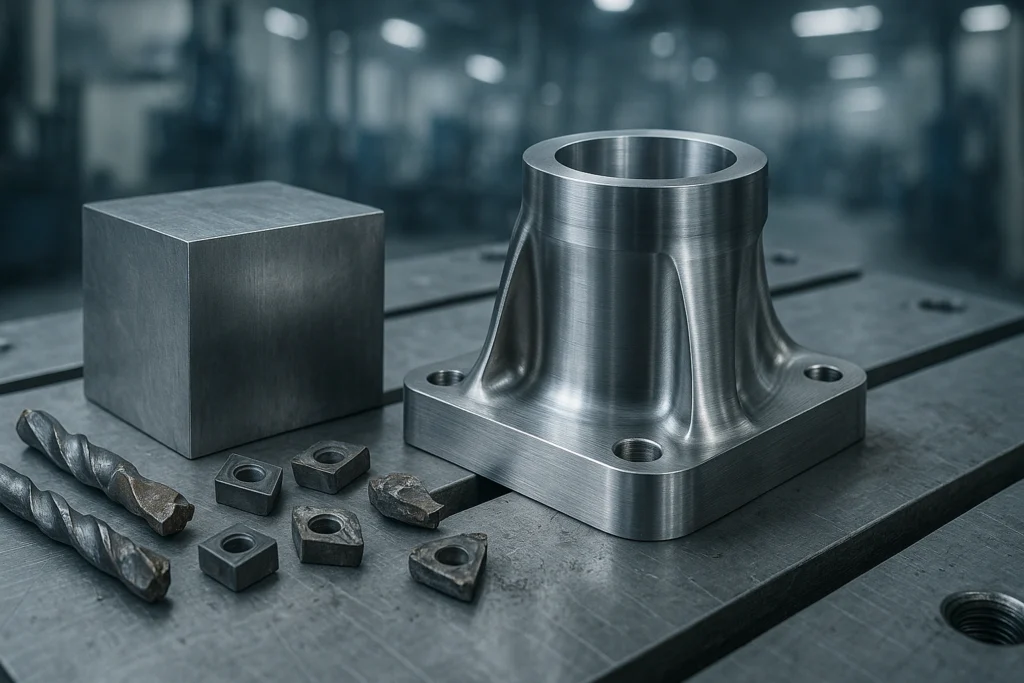
Titanium’s upstream supply is fragile in ways that steel and aluminum are not. There are fewer sponge producers, fewer mills capable of producing aerospace-grade plate and billet, and fewer forge shops with the equipment and certifications to handle high-strength alloys. This concentration means longer lead times, higher minimums, and more exposure to single-source failures.
Raw Material Lead Times Are Long and Inflexible
Mill products—plate, sheet, bar, billet—often have 16-24 week lead times, and that’s if the mill has your grade and size in their production schedule. If you need a special heat treatment, non-standard dimensions, or lot traceability that requires dedicated melting, add 8-12 weeks. Programs that assume “titanium is available” without confirming supplier queue times and MOQs often discover too late that the material won’t arrive in time to meet first-article deadlines.
USGS data from 2024 shows that price volatility and market conditions caused some domestic titanium mining and processing projects to delay or halt operations. When upstream production slows, downstream OEMs feel it as longer lead times and allocation fights.
Geopolitical Exposure Is Real
Russia’s VSMPO-AVISMA supplies a significant share of global aerospace titanium. Boeing severed ties after the Ukraine invasion. Airbus applied for—and received—a temporary waiver in Canada to continue sourcing from VSMPO to protect local jobs, but that’s not a long-term solution. Programs that locked in Russian-origin material without qualifying fallback sources faced a binary choice: redesign around available supply or cancel.
China is another major producer, but ITAR and export control restrictions limit where that material can go. If your program has defense or dual-use applications, Chinese titanium may be off-limits, which shrinks your supplier base further.
Qualifying New Suppliers Takes Months
You can’t just switch mills or forgers mid-program without re-validation. Aerospace and medical programs require documented traceability, mechanical property verification, and first-article inspections. Qualifying a new supplier often means 3-6 months of audits, sample testing, and paperwork—time most programs don’t have when a supplier falls through.
The Cost Reality No One Wants to Model
Titanium programs fail on cost more often than any other single factor. Not because titanium is inherently unaffordable, but because teams systematically underestimate what it takes to produce parts at the required quality level.
Tool Wear and Consumables Are Brutal
Machining titanium destroys tooling. Carbide inserts that last 200 parts in stainless might last 30 in Ti-6Al-4V. You need high-pressure coolant systems (not the flood coolant used for steel) to manage chip formation and heat. If your cost model assumes steel-equivalent tool life and consumables, you’re off by a factor of three to five.
I’ve seen cost models built on aluminum machining rates applied to titanium with a “complexity factor” of 1.5x. The real factor is closer to 4-6x when you account for feed rates, tool changes, inspection intervals, and scrap risk.
Buy-to-Fly Ratios Shock Finance Teams
In aerospace, buy-to-fly ratios of 10:1 or higher are common for complex forgings and machined components. You’re buying 10 pounds of titanium billet to produce a 1-pound finished part. The other 9 pounds become expensive chips. If your cost model assumes 2:1 (typical for castings or near-net shapes), you’re underbudgeting material by 400%.
First-Article and Qualification Costs Aren’t Optional
Aerospace and medical programs require first-article inspections that go far beyond dimensional checks. You’re paying for metallurgical analysis, non-destructive testing (UT, X-ray, dye penetrant), mechanical property validation, and traceability documentation. A single first-article run can cost $50K-$150K depending on part complexity and the certification requirements.
If your design changes during development—and it almost always does—you’re paying for additional first articles. Programs that budget one first-article cycle typically need three.
Minimum Order Quantities and Inventory Costs
Mills and forges have MOQs. You might need 500 pounds of a specific grade and temper, but the mill’s minimum is 2,000 pounds. Now you’re carrying inventory cost, managing storage and traceability for material you won’t use for 18 months, and hoping demand projections don’t change.
For low-volume programs (first-year production under 1,000 units), the MOQ burden can make the per-unit material cost untenable.
The Design-to-Manufacturing Gap
The worst surprises happen when what Engineering approved on paper collides with what Manufacturing can actually build. This isn’t a communication problem—it’s a validation gap. Teams finalize designs based on material data sheets and CAD feasibility without confirming that any supplier in their network can reliably produce those features at the specified volume, cost, and timeline.
Titanium’s physical properties make this gap wider than it is for steel or aluminum. Work-hardening rates, springback behavior, thermal sensitivity, and contamination risk all mean that a feature that machines or forms easily in one material becomes a process development project in titanium. And process development takes time and money that the program didn’t budget.
Features That Look Feasible But Aren’t
A design specifies a 0.040″ wall thickness on a titanium pressure vessel. The material’s yield strength supports it. The stress analysis passes. But when you send the print to suppliers, you learn that their hydroforming process is only validated down to 0.060″ for that diameter and alloy. They can try to develop 0.040″, but it’ll take six months and $200K in tooling trials—neither of which you have.
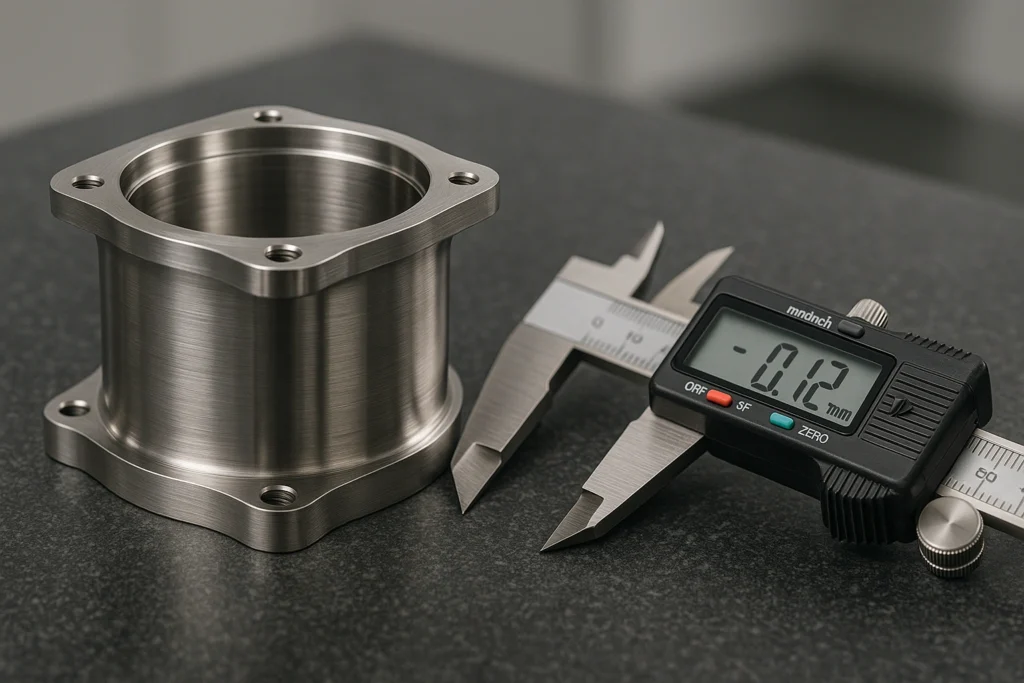
Tight-tolerance holes in titanium shift during machining as residual stresses relieve. A design specifies ±0.001″ on a deep bore. The supplier’s process delivers ±0.003″ consistently. Hitting ±0.001″ would require multiple roughing passes, stress relief between operations, and final honing—tripling the cycle time and cost.
Tolerances That Ignore Process Capability
Engineers sometimes specify tolerances tighter than the program actually requires because “tighter is better” or because they’re copying a stainless steel design. In titanium, unnecessary tightness directly translates to cost. A ±0.005″ tolerance might be achievable in a single machining operation. A ±0.002″ tolerance requires multi-axis CNC, temperature-controlled environments, and post-machining inspection—all of which add 30-50% to unit cost.
I’ve audited programs where the design specified flatness tolerances that required lapping operations the supplier didn’t have equipment for. The program either had to relax the spec (which required re-validation and delayed launch) or find a new supplier (which added 3-4 months).
Material Property Assumptions That Don’t Transfer
Titanium has excellent strength-to-weight ratios and corrosion resistance, but it’s not a drop-in replacement for steel. Designers sometimes take a proven stainless component, swap the material to titanium in the CAD system, and assume the design still works. It usually doesn’t.
Titanium’s modulus of elasticity is about half that of steel, which means parts deflect more under load. A bracket design that’s stiff enough in steel might need ribbing or section thickness increases in titanium—adding weight, cost, and complexity that weren’t in the original business case.
Weld joint designs proven in stainless often fail in titanium because of heat input sensitivity and contamination risk. A fillet weld that’s routine in 316L requires inert gas shielding, precise heat control, and post-weld stress relief in Ti-6Al-4V—or it cracks.
Prevention Framework: What Actually Works
The pattern is clear: programs that survive to production do a specific kind of homework that failed programs skip. It’s not about having bigger budgets or more experienced teams—it’s about validating assumptions before they become commitments. Here’s what works.
Start With Manufacturing Constraints, Not Material Capabilities
Don’t design based on what titanium can theoretically do. Design based on what your shortlisted suppliers have demonstrated they can repeatably produce in the alloy, tolerance range, and volume you need. This means engaging manufacturing partners during the design phase, not after design freeze.
Before you lock a feature—wall thickness, hole tolerance, weld joint geometry—get written confirmation from at least two qualified suppliers that they’ve produced similar features in the same material system. Ask for process capability data (Cpk), not verbal assurances. If no one in your supply base has done it before, you’re not specifying a part, you’re specifying a development program. Budget and schedule accordingly.
Verify Supplier Capability With Process Audits and Sample Runs
RFQ responses are sales documents. Suppliers will claim capabilities they don’t have, betting they can figure it out once they have your PO. Protect yourself with verification before commitment.
Conduct on-site process audits. Review their equipment list, calibration records, and operator certifications. Ask to see recent first-article inspection reports for similar parts in the same alloy. If they claim ±0.001″ machining capability, ask for Cpk data showing they’ve held that tolerance over a production run—not just a one-off sample.
For critical features, pay for pre-production sample runs before you finalize the supplier contract. A $15K sample run that reveals a supplier can’t hit your tolerances saves you from a $500K tooling commitment you can’t recover.
Build Cost Models That Reflect Titanium’s Real Burdens
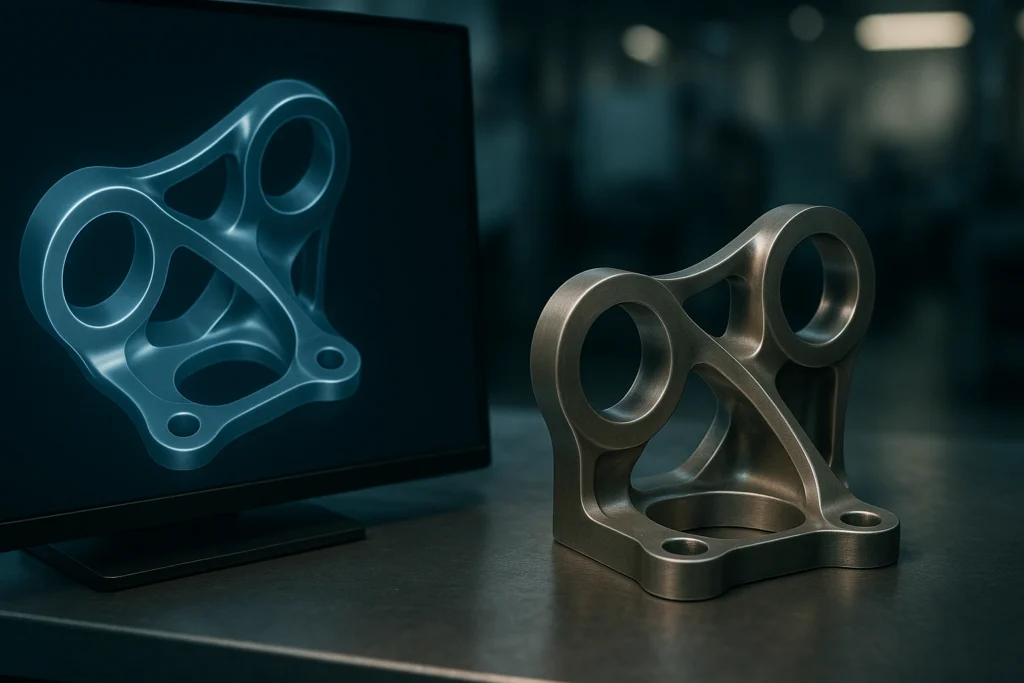
Stop using steel or aluminum cost structures with a complexity multiplier. Build titanium-specific cost models that line-item the specialized burdens: carbide tooling with 10x wear rates, high-pressure coolant systems, inert gas shielding, extended cycle times, elevated scrap risk, and first-article inspection overhead.
Account for realistic buy-to-fly ratios. If you’re machining complex aerospace parts from billet, assume 8:1 to 12:1, not the 2:1 you’d see in castings. Multiply raw material cost accordingly.
Budget for three first-article cycles, not one. Design always changes during development. Every change that affects form, fit, or function triggers re-inspection and re-certification. Programs that budget one first article typically need three and end up scrambling for budget increases that delay the program.
Model Lead Times From Raw Material, Not Supplier Promises
Your supplier’s quoted lead time assumes they have material on hand. They usually don’t. Titanium mill products have 16-24 week lead times from the sponge producer or mill, and that’s if your grade and dimensions are in their production queue. Special heats, non-standard sizes, or traceability requirements add 8-12 weeks.
Build your program timeline with raw material lead time as the critical path. Confirm with your supplier’s purchasing team—not their sales team—what material they actually have in stock, what their call-off agreements cover, and what queue time the mill is quoting for new orders. Add 20% buffer for delays, allocation issues, or quality holds.
Pre-Qualify Supply Chain Alternatives Before You Need Them
Don’t single-source titanium programs. The supply base is too concentrated and too exposed to geopolitical disruption. Before you commit to production, qualify at least one backup supplier for both raw material and processing.
This means doing the audits, running the samples, and completing the paperwork while you still have schedule margin—not after your primary source falls through. Yes, this costs money upfront. But it’s a fraction of what you’ll lose if a sanctions update, supply allocation, or quality issue at your sole source kills the program.
For aerospace and defense programs, verify that your entire supply chain—from sponge to finished part—is free of sanctioned sources or that you have pre-approved waivers in place. Russian and Chinese titanium may be cheaper or faster, but if a policy shift makes it unavailable mid-program, your cost savings evaporate.
Run a Pre-Commitment Risk Review
Before you present the program to leadership for final approval, run a structured risk review with cross-functional participation: Engineering, Manufacturing, Procurement, Quality, Regulatory, and Finance. Use a checklist:
- Have at least two qualified suppliers confirmed they can produce this design in writing, with Cpk data?
- Does the cost model include titanium-specific tooling, consumables, inspection, and scrap burdens?
- Is the timeline built from confirmed raw material lead times, not supplier marketing promises?
- Have we qualified backup suppliers for both raw material and processing?
- Does the supply chain avoid sanctioned or export-controlled sources, or do we have waivers in place?
- Have we budgeted for three first-article cycles and design iteration?
- Are the specified tolerances driven by functional requirements, or are they carryovers from steel/aluminum designs?
If you can’t answer yes to all of these, you’re not ready to commit. Delay the program, fill the gaps, or accept that you’re gambling with a 70% failure rate.
The Diligence Dividend
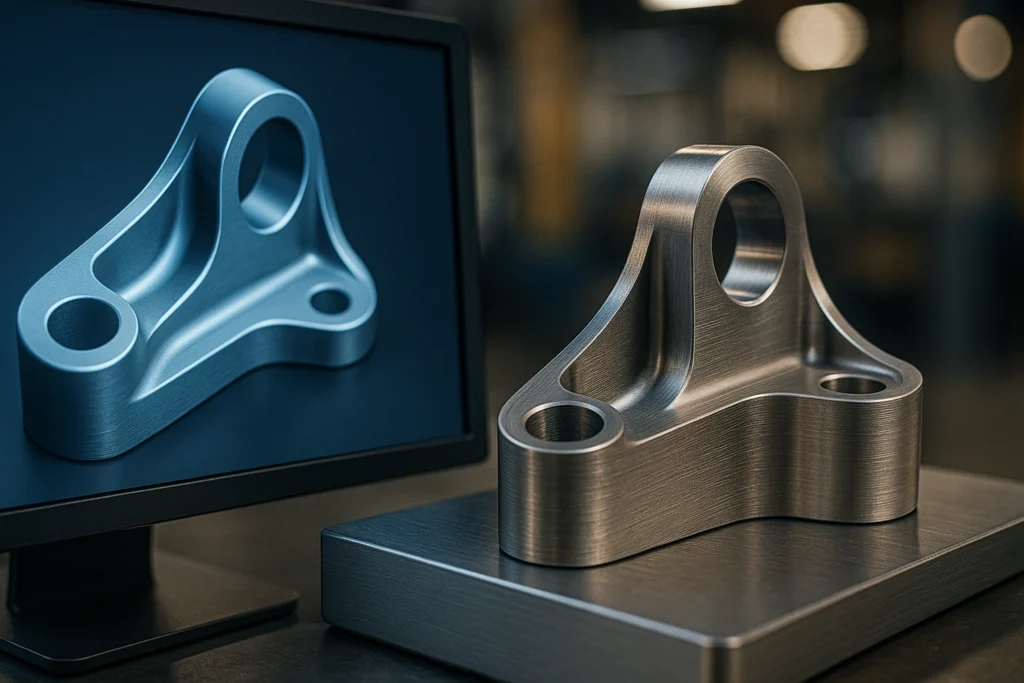
The programs that make it to production aren’t lucky. They’re the ones where someone had the courage to say “we’re not ready yet” when the business pressure was to commit. They’re the programs that spent an extra eight weeks validating supplier claims, or paid $40K for pre-production samples that revealed a fatal flaw before tooling was cut.
That diligence feels expensive in the moment. It delays revenue projections and frustrates executives who want commitment. But it’s a fraction of the cost of cancelling a program after you’ve spent 18 months and burned through the development budget.
The 30% of titanium programs that succeed do one thing differently: they treat feasibility validation as a prerequisite for commitment, not an afterthought. They assume supplier claims are optimistic until proven otherwise. They build timelines from material lead times, not backward from launch dates. And they accept that preventing a bad program from starting is a better outcome than heroically trying to rescue one that never should have been approved.
If your titanium program feels like it’s on shaky ground, it probably is. The question is whether you’ll acknowledge that in a conference room today, or in a post-mortem review eighteen months from now.