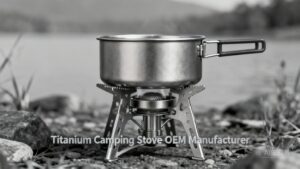
In the fiercely competitive outdoor gear market, innovation, durability, og ultralight design are paramount. For backpacking brands, ultralight gear companies, and discerning camping stove buyers, the material of choice for high-performance cooking systems is increasingly titanium.
Its unparalleled strength-to-weight ratio, exceptional corrosion resistance, and high-temperature tolerance make it ideal for creating stoves and windshields that stand up to the most demanding wilderness conditions. Partnering with a specialized Titanium komfur & forrude OEM gives brands a decisive advantage— leveraging expert manufacturing capabilities to deliver products that exceed consumer expectations.
This whitepaper unpacks the full OEM journey: advanced titanium processing, heat testing, machining methods, cost structures, QC protocols, packaging options, and real-world use cases—providing a clear roadmap for brands that want to dominate the ultralight gear segment.
The Unrivaled Advantage of Titanium in Outdoor Gear
Titanium’s unique properties address the core demands of outdoor adventurers: minimal weight, maximum performance, and unwavering reliability.
Why Titanium for Stoves & Windshields?
- Exceptional Strength-to-Weight Ratio: Lighter than steel yet equally strong, reducing pack weight—critical for ultralight hikers and thru-hikers.
- Superior Corrosion Resistance: Titanium resists rust, saltwater, and chemical exposure, ensuring performance in all climates.
- High Melting Point (1668°C): It tolerates intense stove heat without structural deformation.
- Biocompatibility & Safety: Titanium is inert and non-toxic—a testament to its cleanliness even in the harshest environments.
- Premium Aesthetic: The matte grey surface communicates quality and rugged sophistication.
Precision Manufacturing: The Core of Titanium OEM
Building titanium outdoor gear requires specialized machines, strict heat control, and highly trained technicians. A capable OEM converts raw titanium sheets into high-performance outdoor equipment using advanced fabrication methods.
Titanium Forming: Shaping High-Performance Gear
Specialized titanium forming processes include:
- Stamping: Dies and hydraulic presses shape stove bases, panels, and baffles.
- Bending: CNC press brakes form clean, precise folds used for panel edges and interlocking structures.
- Deep Drawing: Used for seamless cup-type structures—stronger and free of weak weld points.
The accuracy and control in this stage directly impact the stability, fit, and heat efficiency of the stove system.
Expert Titanium Welding
Welding titanium is challenging: contamination from oxygen or nitrogen causes embrittlement. OEM-grade welding requires strict inert shielding and experienced technicians.
- TIG Welding: Produces clean, strong welds with full argon shielding—best for visible seams and load-bearing joints.
- Laser Welding: Ideal for thin titanium panels and precision joints with minimal heat distortion—perfect for high-volume OEM lines.
Advanced Slot Machining
Slot machining influences:
- Airflow efficiency for stable combustion
- Weight reduction without compromising strength
- Interlocking performance for collapsible stoves
High-precision CNC ensures consistent tolerances and smooth edges, which improves both user experience and flame efficiency.
Folding Hinge Assembly
Collapsible titanium stoves and windshields rely on engineered hinge structures designed for:
- Repeated folding cycles without loosening
- Secure deployment for stable cooking
- Minimal packed size for ultralight storage
Rigorous Heat Testing Protocols
All titanium stove systems undergo:
- Thermal cycling tests—ensuring metal fatigue resistance
- Continuous burn tests—for fuel efficiency and heat output
- Wind tunnel tests—for windshield performance validation
- Load testing—confirming structural stability under cooking weight
Heat testing validates durability and ensures the stove performs consistently in harsh outdoor environments.
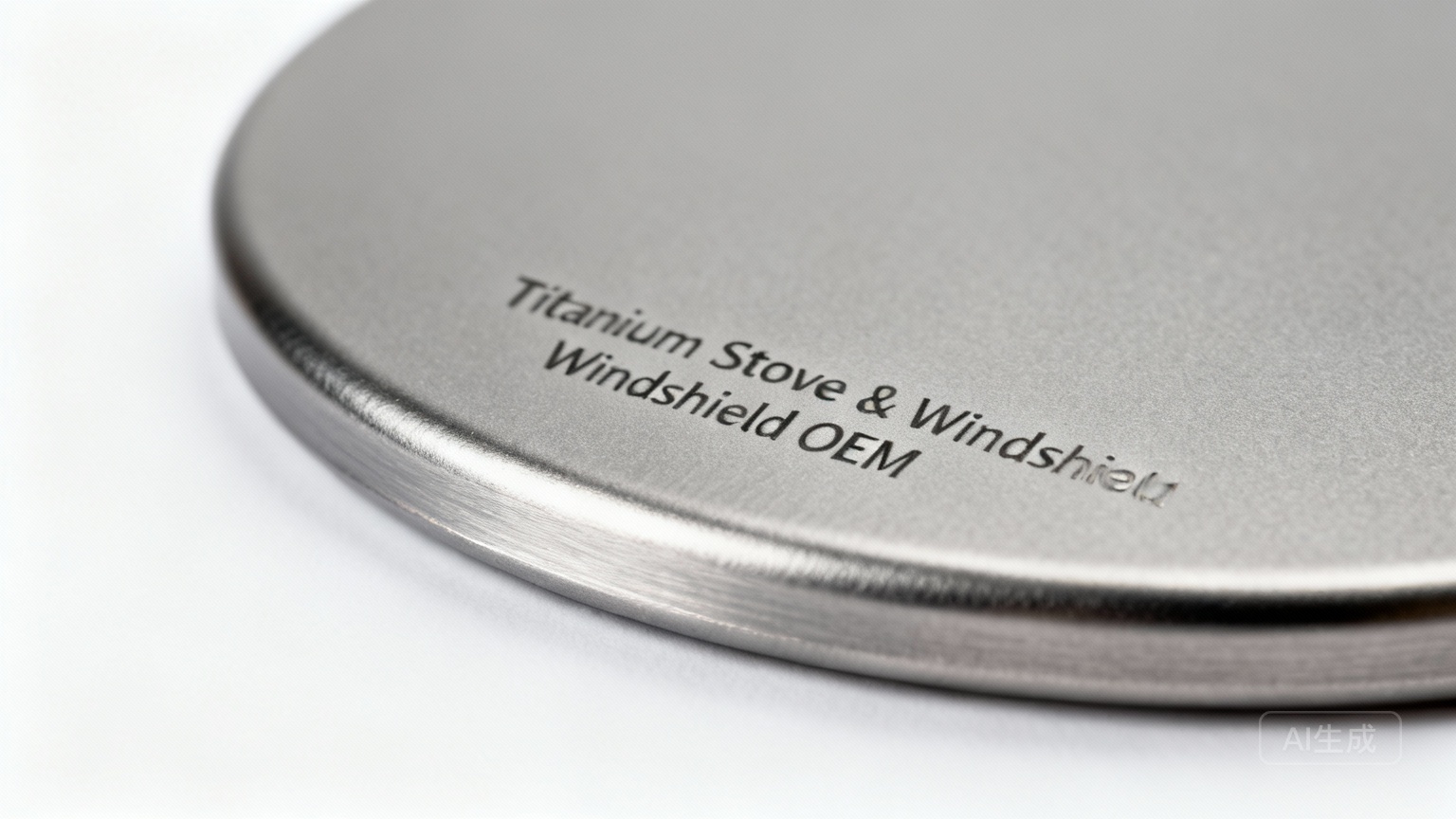
Understanding Titanium OEM Cost Structure (2025 Framework)
Titanium outdoor gear requires specialized fabrication, resulting in a cost structure that differs significantly from stainless steel or aluminum products. For brands entering the titanium category, understanding these cost drivers is essential for accurate price benchmarking and long-term planning.
Key Cost Components
- Raw Material (Grade 1 / Grade 2 Titanium): 40–60% of cost
- Stamping & Machining: 15–25%
- Welding & Assembly: 10–20%
- Quality Control: 5–10%
- Emballage: 3–8%
- OEM Margin: 8–15%
Titanium’s higher melting point, poor thermal conductivity, and reactivity increase processing difficulty—raising labor and setup costs.
MOQ Logic for Titanium Stove Production
Due to tooling preparation and machine calibration, OEM factories typically enforce MOQs:
- Laser-cut panels: 200–300 pcs
- Stamped components: 300–500 pcs
- Full stove sets: 300+ sets
Projects using existing tooling can reduce MOQ dramatically, enabling smaller brands to enter the titanium category with limited upfront investment.
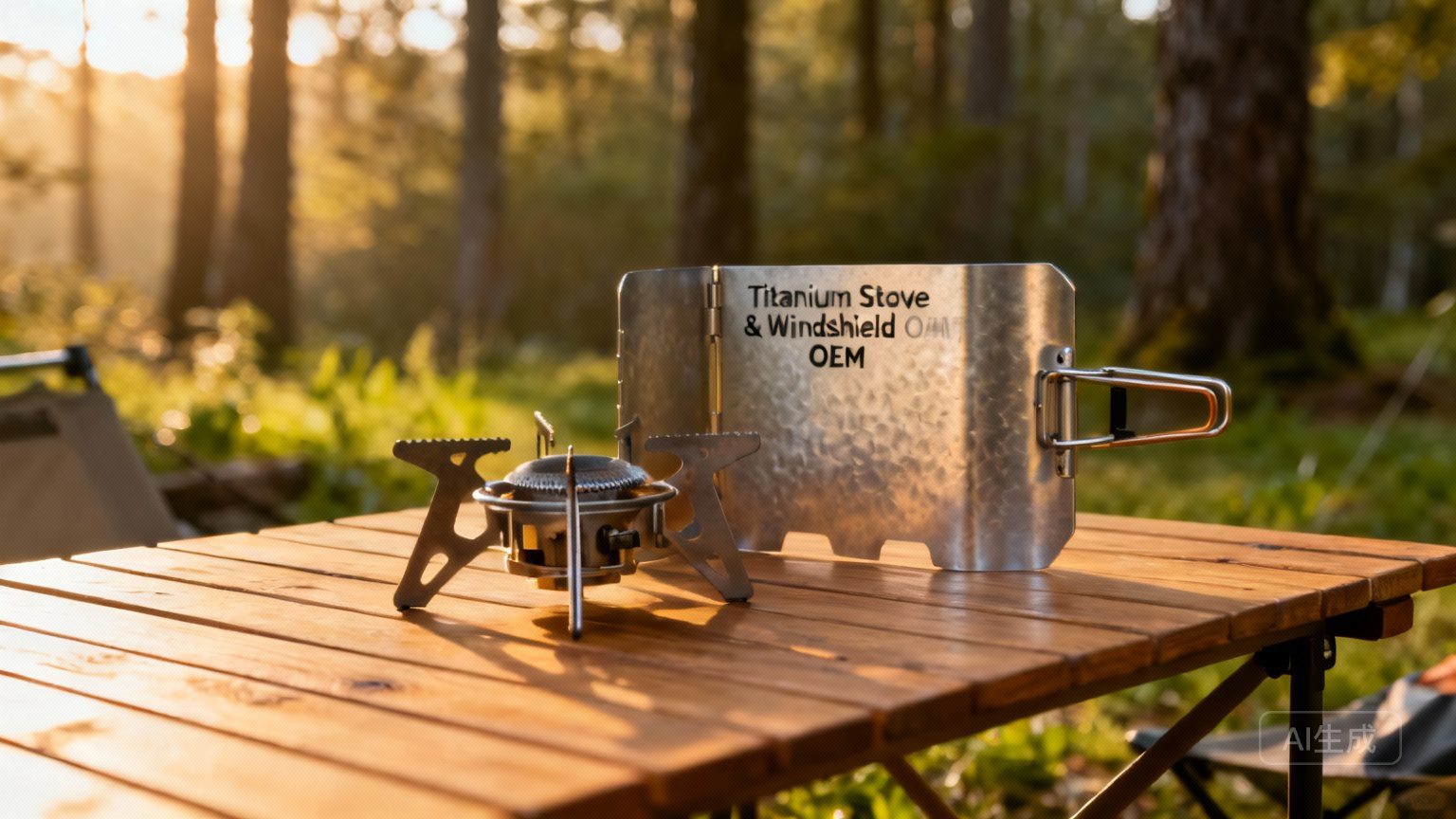
OEM Customization Options for Titanium Stoves & Windshields
Titanium OEM partners offer a wide range of customization pathways to help brands create unique, high-performance products tailored to their audiences.
Dimension Customization
- Panel height / width
- Burner opening diameter
- Slot geometry (oval, rectangular, cross-vent)
- Foldable or fixed structure
Finishing Options
- Sandblasted: premium matte look
- Polished: classic metallic appearance
- Heat blueing: natural rainbow patterns
Branding Features
- Laser engraving (logo, text, serial ID)
- Laser-cut logos integrated into airflow slots
- Custom packaging with brand assets
Functional Enhancements
- Titanium alloy reinforcement
- Interlocking panel design for stability
- Multi-fuel compatibility (alcohol, hexamine, wood)
- Wind-resistant panel curvature

OEM Quality Control Framework
Titanium stove systems face high thermal and structural stress. A strong QC system ensures safety, reliability, and consistency.
Core QC Tests
- Material Certification: ASTM titanium grade verification
- CNC Tolerance Checks: ±0.1–0.2 mm typical
- Weld Integrity Test: argon shield continuity & penetration
- Thermal Cycling: repeated heating/cooling stress tests
- Load Testing: pot stability under dynamic load
- Wind Resistance Test: flame shielding analysis
- Surface Finish QC: scratch, dent, and oxidation inspection
Packaging Options for Titanium Stoves & Windshields
Primary packaging types include:
- Minimalist Kraft Packaging: for ultralight gear brands
- Nylon Storage Pouches: compact and durable for backpackers
- Retail-Ready Color Boxes: suitable for retail and Amazon sales
Packaging can include custom size labels, instructions, safety guides, and brand visuals.
Lead Time & Logistics Overview
- Tooling: 10–25 days
- Prototype: 7-12 dage
- Mass Production: 25–35 days (depending on volume)
- Forsendelse: Express 5–8 days / Sea 25–35 days
Conclusion: Build a Market-Leading Titanium Stove Line
With rising demand for durable, ultralight gear, titanium stove and windshield OEM partnerships offer brands a competitive path to launching premium outdoor products. From advanced forming to precision welding, from airflow design to heat testing, titanium equipment manufacturing requires deep expertise.
Brands that understand titanium’s unique cost structure, material advantages, and manufacturing constraints can make informed decisions, accelerate development, and deliver exceptional gear that meets the expectations of outdoor enthusiasts worldwide.